
Key Takeaways
- A smoke detector has a working life of about 10 years from its date of manufacture, and it should be replaced at that point, even if it still sounds when tested.
- The 10-year rule applies to every detector, hardwired or battery-powered, as the sensor inside wears out on the same timeline no matter how the unit is powered.
- Replace a detector before the 10-year mark if it keeps chirping after a fresh battery, gives false alarms with no smoke around, or shows yellowing, cracks, or other visible damage.
- A detector that gives no response, a weak sound, or a slow one when you press its test button has already failed and needs replacing right away.
- Point Loma Home Pros installs and replaces hardwired smoke detectors with licensed electricians who place and wire each unit to help protect your whole home.
When Should You Replace a Smoke Detector?
Replace a smoke detector at the 10-year mark, since the sensor inside degrades even when the unit still passes its test button. Most homeowners judge a detector by whether it beeps on command, but that response only confirms the alarm circuit works, not that the sensor can still detect real smoke. The gap between a working test and reliable detection is where most missed replacements happen.
Waiting until the alarm fails outright removes your buffer for reaction time in an actual fire. A detector nearing its expiration date responds more slowly and misses lower concentrations of smoke, so early warning shrinks well before total failure. That decline happens silently, since nothing on the unit signals reduced sensitivity until testing fails or a warning sign appears.

How Long Do Smoke Detectors Actually Last?
Smoke detectors last about 10 years from the date of manufacture, not the purchase or installation date. After that, the internal sensing components lose sensitivity, even if the unit still powers on and beeps when tested.
The National Fire Protection Association (NFPA) recommends replacing every smoke alarm at the 10-year mark. This applies to every unit regardless of power source, so a hardwired detector ages the same way a battery-powered one does.
Harsh spots wear a detector out faster. Units in kitchens, garages, bathrooms, and laundry rooms face grease, moisture, and temperature swings that accelerate internal wear, so in those locations, it’s worth testing more often and replacing them.
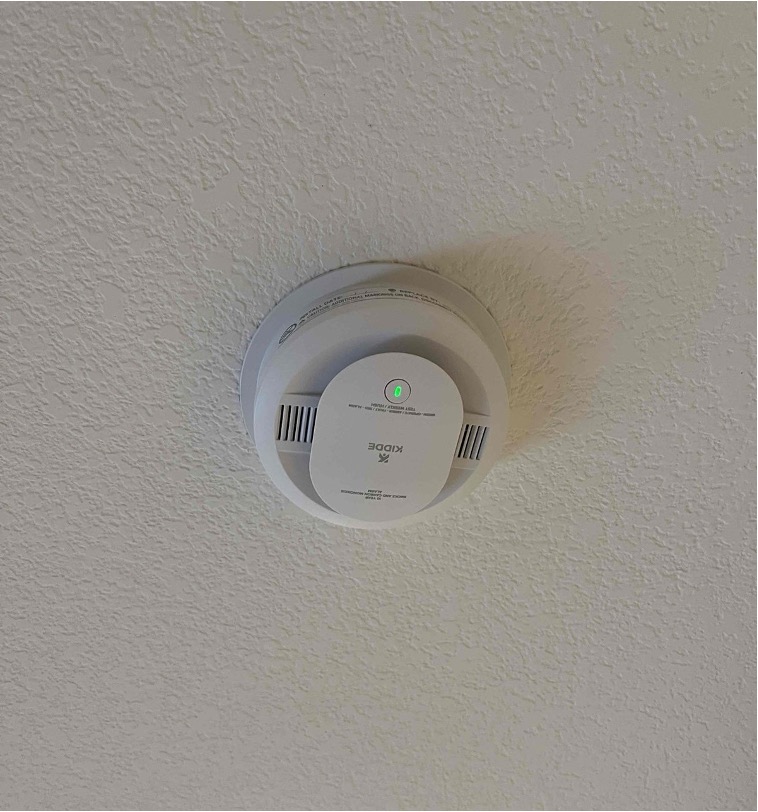
The manufacture date printed on the back of a detector tells you how much working life it has left.
Warning Signs Your Smoke Detector Needs Replacing Now
Age isn’t the only reason to swap a detector. A unit can signal its own failure well before 10 years, and these are the signs to watch.
Constant Chirping That Won’t Stop After a Battery Change
A single chirp every 30 to 60 seconds usually means a low battery. If you put in a fresh one and it keeps chirping, the unit itself is likely failing. Many alarms use a distinct end-of-life chirp, different from the low-battery sound, to tell you the whole unit needs replacing.
Frequent False Alarms With No Smoke Present
An occasional false trip from cooking is normal, but repeated alarms with no steam, smoke, or dust point to a sensor that has grown erratic with age. A detector that cries wolf is a real hazard, as people start tuning out the alerts.
Visible Yellowing, Cracks, or Physical Damage
Detector housings turn yellow as the plastic ages and is exposed to UV light, which flags a unit that has been degrading for years. Cracks are worse. They let dust, moisture, and insects into the sensing chamber, throwing off its reading. Any detector with visible damage should be replaced right away, whatever its age.
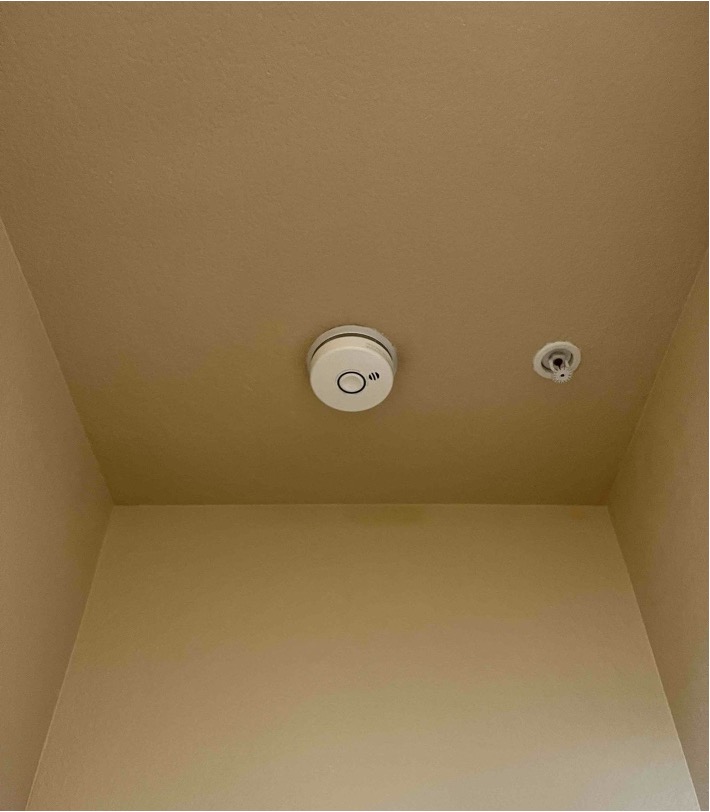
A detector often shows it’s failing, through visible damage, before its age alone would tell you to replace it.
The Device Fails Its Monthly Test
Press and hold the test button until the alarm sounds. If you get no response, a weak chirp instead of a full alarm, or a slow response, the unit is failing and needs to be replaced. A working detector answers within a few seconds with a loud, clear tone.
What Shortens a Smoke Detector’s Lifespan?
- High-humidity environments: Bathrooms, kitchens, and laundry rooms expose detectors to consistent moisture, which corrodes internal components faster than normal.
- Excessive dust and airborne debris: Dusty environments like garages or homes near construction sites clog sensing chambers and reduce sensitivity.
- Extreme temperature fluctuations: Detectors installed in attics or garages where temperatures swing dramatically degrade significantly faster than those in climate-controlled spaces.
- Cooking grease and steam: Repeated exposure to cooking byproducts coats the sensing chamber with residue, distorting the sensor’s readings over time.
- Cigarette or fireplace smoke: Chronic low-level smoke exposure slowly desensitizes ionization sensors, making them less reactive to an actual fire event.
Where you place your smoke detector matters almost as much as which detector you choose. A unit installed directly above a kitchen stove or in a steamy bathroom is aging at a rate that could cut years off its effective lifespan.
Point Loma Home Pros Keeps Your Home’s Smoke Detectors Current

Point Loma Home Pros has kept San Diego homes safe for nearly four decades, from smoke detectors to full electrical work.
A smoke detector is easy to overlook, but its age and condition decide if it works when it matters most. The rule is simple: replace any unit at the 10-year mark, and sooner if it chirps after a battery change, false-alarms often, shows damage, or fails its monthly test.
If your detectors are overdue or you’re unsure what you have installed, Point Loma Home Pros can assess your home’s setup and confirm every unit is correctly placed and properly installed. Our licensed electricians handle hardwired and interconnected detectors safely, so every unit communicates properly, and your entire smoke detection system works together. Contact Point Loma Home Pros today to bring your home’s fire protection up to date.
Frequently Asked Questions (FAQs)
How do I know when my smoke detector needs to be replaced?
Check the manufacture date printed on the back of the unit, which shows the month and year it was made. If that date is more than 10 years ago, the detector is expired and should be replaced, regardless of its appearance or test-button response. Internal sensor decline happens gradually and invisibly, so a unit can chirp on command and still miss real smoke, making the manufacture date the only reliable measure.
Can I just replace the battery instead of my whole smoke detector?
Not always. Replacing the battery restores power, but it does nothing for the sensor inside, which degrades as the unit ages. If the detector is past its lifespan or shows warning signs like chirping after a fresh battery or a failed test, the whole unit needs replacing.
How often should I test my smoke detector?
Test every detector in your home once a month using the built-in test button. Replace the batteries at least once a year, which is easy to remember if you do it during the Daylight Saving Time change. Also look over each unit for yellowing, cracks, or damage, and check the manufacture date if you’re unsure how old it is.
Where should smoke detectors be placed in a home?
Fire safety guidance is to install detectors on every level of the home, inside each bedroom, and outside every sleeping area, so a multi-story home needs at least one per floor. Keep them away from cooking appliances to reduce nuisance alarms, and away from windows, doors, and vents, where drafts can pull smoke away from the unit. Point Loma Home Pros can assess your home’s layout and place each detector where it protects best. We also provide flexible payment plans starting at $99/month.
What is the difference between ionization and photoelectric smoke detectors?
An ionization detector responds faster to fast-flaming fires, while a photoelectric detector responds faster to slow, smoldering fires. A home fire could be either kind. You can use both types, or a single dual-sensor unit that combines them, for the broadest protection.
*Note: All pricing and service information is for general guidance only and reflects typical estimates at the time of writing. Actual costs, scope, and timelines may vary based on the home’s condition, access, materials, project complexity, and local market factors. For more information on our services and current pricing, visit Point Loma Home Pros.