
Key Takeaways
- A 100 amp panel is enough for a Tesla charger in plenty of homes, as long as a load calculation shows the capacity is there before you install.
- A Tesla Wall Connector at full power pulls 48 amps and needs a dedicated 60-amp circuit, though it can be set to a lower output to fit a smaller breaker and a tighter panel.
- What your home already draws is the deciding factor, so a lighter gas-appliance home may have plenty of room while a heavier all-electric one may have almost none.
- If your panel is tight, a service upgrade isn’t the only answer, since a lower charger setting or a load management device can often make a 100 amp panel work.
- Point Loma Home Pros checks what your panel can safely support and gives you an honest recommendation, so you only pay for the work your home actually needs.
Can a 100 Amp Panel Handle a Tesla Charger?
Yes, in many cases it can, though it depends on how much of your service your home already uses. “100 amp service” doesn’t mean you have a full 100 amps available to spend, since your heating, kitchen appliances, lighting, and other circuits draw from the same panel. Once those are accounted for, your real headroom is often smaller than you’d think, but frequently still enough for a charger.
If your home runs light on electricity, or you set the charger to a lower output or pair it with a load management device, a 100-amp panel can often support Tesla charging without a service upgrade.

Tesla Charger Electrical Requirements
Tesla’s home charger, the Wall Connector, delivers up to 48 amps of continuous power at full output. That draw calls for a dedicated 60-amp circuit, since the breaker is sized above the charger’s continuous load to give the circuit headroom.
Here’s how Tesla’s charging options compare:
- Wall Connector (full power): 48-amp continuous draw, 60-amp breaker
- Wall Connector (reduced power): configurable to lower outputs, for example, 24 amps on a 30-amp breaker
- Mobile Connector (120V, Level 1): about 12 amps on a standard outlet, no panel work needed
- Mobile Connector (240V, Level 2): up to 32 amps, on a 40-amp breaker
The Wall Connector can also be set to draw less power if your panel can’t support its full output. That flexibility is a big reason a full service upgrade often isn’t necessary.
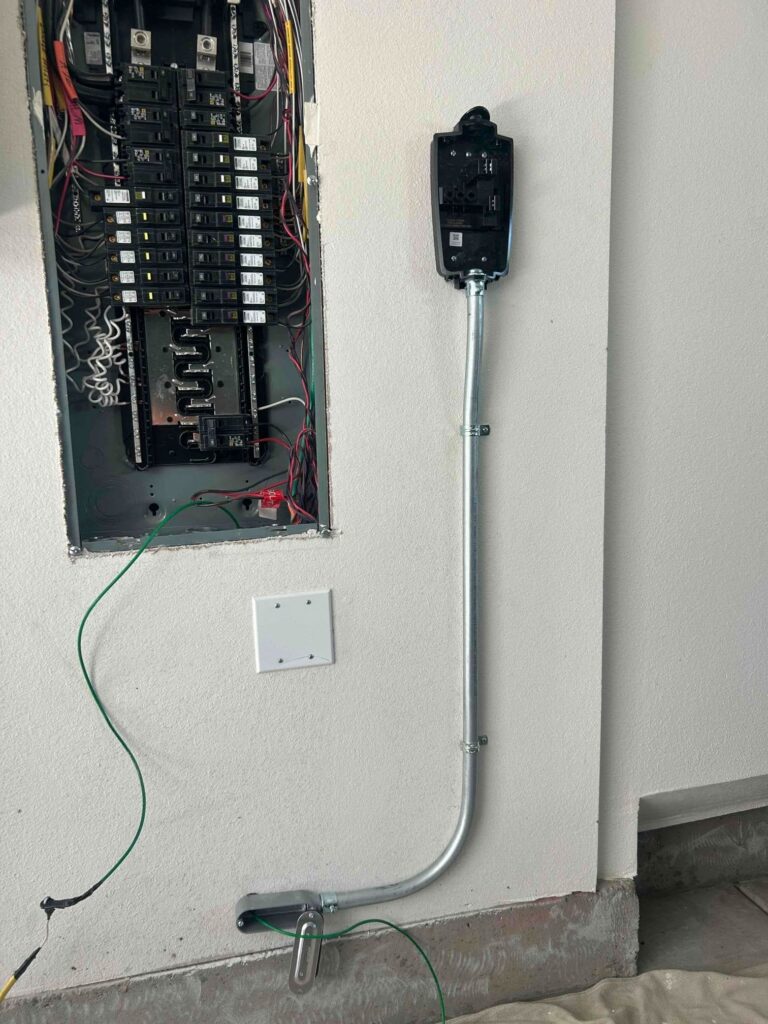
A Tesla charger needs its own circuit, so nothing else draws from the line that feeds it.
How Much Capacity Does a 100 Amp Panel Have?
A 100-amp panel doesn’t give you a full 100 amps to spend. Continuous loads need built-in headroom, so the practical usable ceiling is closer to 80 amps, and that fills up faster than most people expect.
A home running all-electric appliances, an electric range, dryer, water heater, and central AC, can be near its limit before an EV charger enters the picture.
A home with gas heat, a gas water heater, and a gas range carries a much lighter load, and may have room for a Tesla charger with no panel changes. This is why a load calculation is the first step before buying a charger.
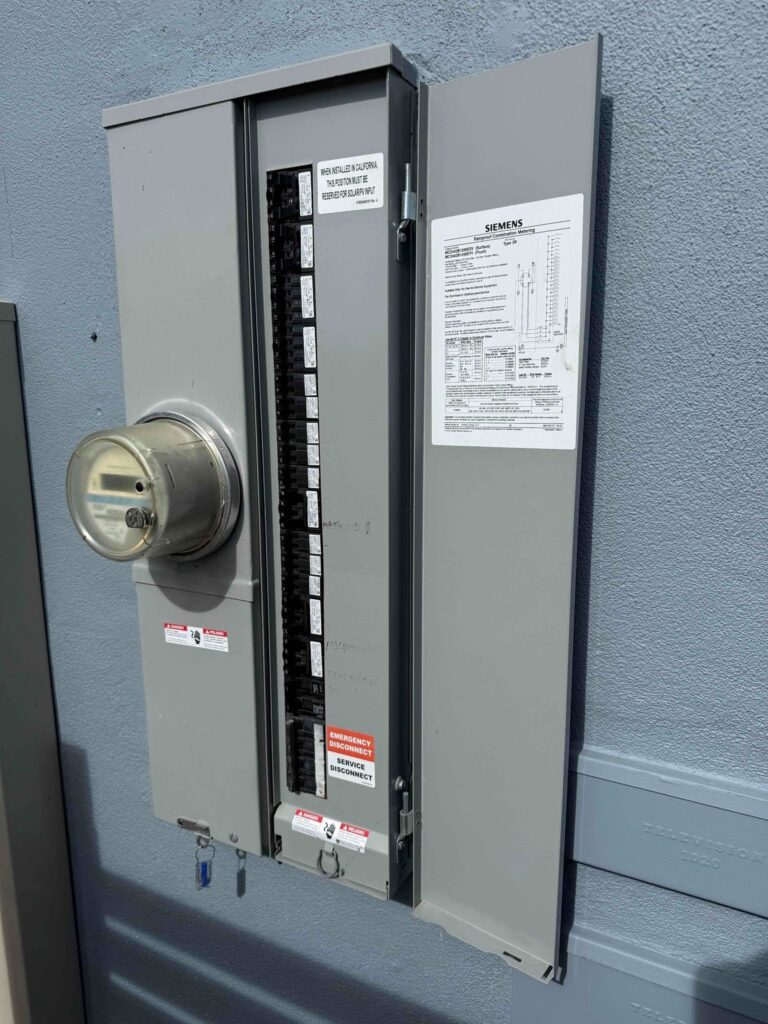
A panel’s amp rating is only the starting point, since the appliances already wired to it determine your real spare capacity.
How a Load Calculation Tells You If You Can Add a Charger
A load calculation shows how much demand your home places on the panel. A licensed electrician uses it, rather than relying on guesswork, to decide whether an EV charger can be added safely.
It doesn’t simply total every appliance’s maximum draw, because not everything runs at full power at the same time. Instead, it applies standard adjustments to estimate real demand and then compares it against your panel’s rated capacity.
Here’s a simplified picture of two homes:
| Load item | Home A (mostly gas) | Home B (all electric) |
|---|---|---|
| Heating | ~5A (blower only) | ~40A |
| Water heater | 0A (gas) | ~25A |
| Range/oven | 0A (gas) | ~40A |
| Dryer | ~30A | ~30A |
| Air conditioning | 0A | ~35A |
| General household | ~20A | ~20A |
| Rough total | ~55A | 150A or more |
| Room for an EV charger? | Yes, with room to spare | No, an upgrade is needed |
Home A has roughly 25 amps of usable headroom, enough for a 24-amp Tesla charger on its own, or a higher-output charger paired with a load management device.
Home B is already beyond what the panel can carry, so it needs a service upgrade or a serious load management plan. These figures are illustrative, and only a licensed electrician’s load calculation gives the real number for your home.
When You Need to Upgrade to 200 Amp Service
1. You Are Adding a Hot Tub or Sauna
Hot tubs and saunas are among the heaviest loads you can add to a home. A hot tub draws 40 to 60 amps on its own circuit, and a sauna can pull a similar load depending on its heater.
A load management device can throttle your charger when the house needs power, but it can’t create capacity that isn’t there. If a hot tub alone uses nearly half your panel’s usable headroom, a Tesla charger on top of everything else exceeds what 100-amp service can safely carry, so an upgrade is the right move.
2. Your Home Has a Secondary Suite
An ADU, in-law suite, or basement apartment raises your home’s baseline load with its own kitchen, laundry, heating, and outlets, all drawing from the same panel.
Add a Tesla charger to that, and 100-amp service is almost always short, so a 200-amp upgrade becomes necessary.
3. You Are Switching From Gas to Electric Heat
Replacing a gas furnace with an electric heat pump or electric baseboards is one of the largest single loads a home can carry.
Electric heating can draw 60 amps or more, depending on the size of the home, leaving a 100-amp panel with almost no headroom. If you’re planning an all-electric home, 200-amp service is the right foundation to build on.
Find Out If Your Panel Is Tesla-Ready with Point Loma Home Pros
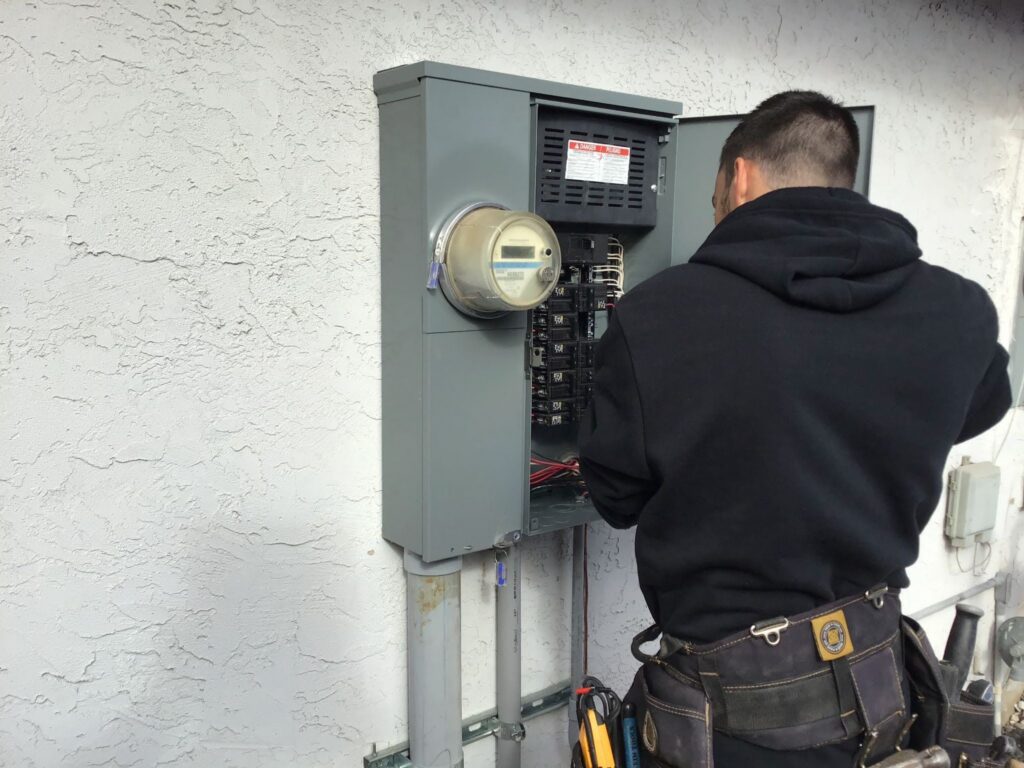
A licensed electrician reads your panel and its existing load to confirm what your home can safely add before any charger goes in.
A 100-amp panel can sometimes handle a Tesla charger, but only if your home’s existing load leaves enough room. At Point Loma Home Pros, our licensed electricians run thorough calculations and match the charger setup to what your panel can safely carry, from a full-power install to a load-managed one or an upgrade.
As one team, we handle the charger, the circuit, and any panel work together, so nothing gets passed to a second contractor. To find out exactly what your home can support, contact Point Loma Home Pros for a load assessment.
Frequently Asked Questions (FAQs)
What size breaker does a Tesla Wall Connector need?
At full power, the Wall Connector draws a continuous 48 amps, so it needs a dedicated 60-amp breaker. If you set it to a lower output, say 24 amps, it can run on a 30-amp breaker instead. That flexibility lets the install match what your panel can support.
How long does it take to install a Tesla charger?
A straightforward install, where your panel has capacity and the charger sits near it, usually takes a few hours. If the job involves a panel upgrade, a long wire run, or coordinating a utility shutoff, it can take a full day or a follow-up visit after the inspection clears.
Does a 100 amp service need an upgrade for an EV charger?
Not automatically, since many homes on 100-amp service have the room for one. The only way to know for certain is to have a load calculation done by a licensed electrician, which measures your actual demand. From there, the electrician can tell you if you can install directly, add a load management device, or need a service upgrade.
What is a load management device and do I need one?
It’s a device that monitors your home’s power use in real time and automatically slows your EV charger when other big appliances are running, then speeds it back up when they stop. Your car still charges, just at a variable rate depending on what else is on. It’s the right fit when your load calculation shows some headroom but not enough for a full-power charger.
Who should install my Tesla Wall Connector?
A Tesla Wall Connector hardwires to a dedicated 240-volt circuit, which means panel work, a permit, and an inspection, so it’s a job for a licensed electrician, not a DIY project. Point Loma Home Pros handles Tesla charger installations across San Diego, performing load calculations, sizing the circuit, and handling any panel work with a single licensed team. Every install is backed by our workmanship guarantee, so it’s done safely and to code.
*Note: All pricing and service information is for general guidance only and reflects typical estimates at the time of writing. Actual costs, scope, and timelines may vary based on the home’s condition, access, materials, project complexity, and local market factors. For more information on our services and current pricing, visit Point Loma Home Pros.