
Key Takeaways
- Loose plugs, scorch marks, flickering lights, mild shocks, and repeated breaker trips are early warning signs that an electrical outlet is failing and needs to be replaced before it causes a wiring fire or injury.
- Standard two-prong outlets and any non-GFCI outlets in kitchens, bathrooms, garages, or outdoor areas fall short of current National Electrical Code requirements and should be upgraded, especially in San Diego homes built before modern code cycles.
- A licensed electrician from Point Loma Home Pros should inspect and replace any outlet that has sparked strongly, shocked someone, or shows burn marks, because the damage behind the wall is often worse than what is visible at the receptacle.
- Most standard outlets last between 15 and 25 years, and homes built before the 1960s often lack a ground wire entirely, which changes the scope of a safe replacement and usually requires either new wiring or code-compliant GFCI protection.
- Point Loma Home Pros serves San Diego homeowners with outlet replacements, GFCI upgrades, and full electrical inspections for older homes, backed by licensed electricians and over 2,000 five-star reviews.
How Do You Know When an Outlet Needs to Be Replaced?
Replace an electrical outlet when it no longer holds plugs firmly, shows scorch marks or cracks, sparks or shocks you, causes lights to dim, or sits on a circuit that trips repeatedly. Outlets in San Diego homes built before the 1960s also need upgrading if they are still two-prong, because they usually lack a ground wire.
Most outlets don’t fail all at once. They degrade gradually, and the warning signs show up long before a serious problem occurs. Once you know what to look for, you can walk through your home and spot trouble before it becomes a safety issue.
Take a look at the list below to spot the warning signs:

1. Loose Connections That Won’t Hold a Plug
If a plug falls out of an outlet on its own, or if you have to adjust it to get a device to charge, the outlet’s internal contact points are worn out. Those small metal clips inside the receptacle are designed to grip a plug firmly, but over time, they lose their tension.
A loose outlet creates arcing, which is an electrical spark jumping across a gap that generates intense heat and can ignite surrounding materials inside your wall without any visible warning. If a plug won’t stay snug on its own, the outlet needs to be replaced by a licensed electrician.
2. Cracks, Scorch Marks, or Discoloration on the Outlet Plate
Visible damage to an outlet plate is never purely cosmetic. A cracked cover, burn marks, or any yellowing or blackening around the slots means heat has built up in or around that outlet. That is a sign of either a past arcing event or an ongoing wiring issue.
Scorch marks in particular indicate that the outlet has already experienced a dangerous heat event, and even if it still works, the internal components may be compromised. Replace it immediately and have a licensed electrician inspect the wiring behind it.
3. Standard Outlets in Kitchens, Bathrooms, or Outdoors
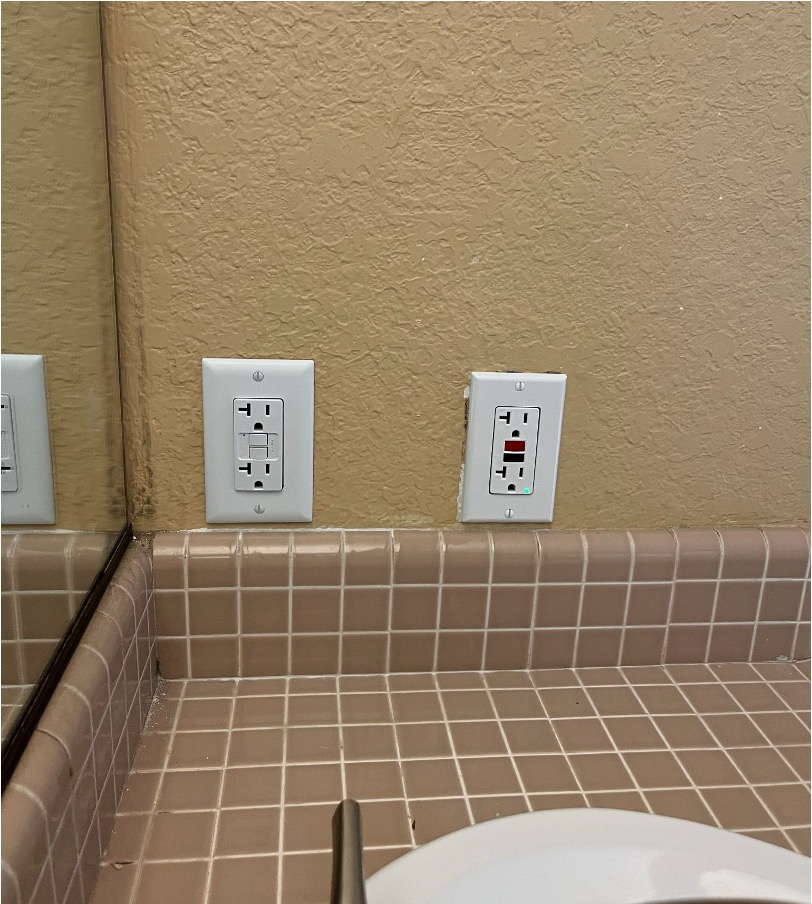
Bathrooms require GFCI outlets anywhere water and electricity share the same space.
Water and electricity are a dangerous combination, and standard outlets have no protection against moisture contact. If your kitchen countertops, bathroom walls, garage, or outdoor areas have standard outlets instead of GFCI outlets, they need to be upgraded.
A GFCI outlet monitors the flow of electricity through a circuit and shuts off power almost instantly if it detects an imbalance caused by water contact. If your home predates the years when GFCI protection became code-required in wet areas and hasn’t been updated, there’s a chance those outlets don’t meet current safety standards.
4. Flickering Lights or Appliances That Dim When Plugged In
When you plug a lamp into an outlet and the light flickers or dims unexpectedly, the outlet may no longer be delivering consistent voltage. This is usually caused by worn internal wiring, a deteriorating receptacle, or a loose wire connection at the outlet’s terminal screws.
Consistent power delivery is what your devices depend on, and inconsistency puts both your appliances and your wiring at risk.
When Flickering Points to a Bigger Wiring Problem
Occasional flickering from a single outlet is usually an outlet-level issue. If you notice flickering across multiple outlets or throughout a room, the problem may be deeper in your electrical system, possibly at the circuit breaker panel or in the branch wiring. In that case, a licensed electrician should inspect the entire circuit, not a single outlet.
5. Sparking or Electric Shocks When You Plug Something In
A small, brief spark when you plug something in can be normal as the circuit connects. A large spark, a popping sound, or any shock or tingle when touching a plug or outlet is a different situation entirely.
These are signs of a serious wiring fault, a short circuit, or a ground fault inside the outlet, and the outlet needs to be replaced immediately by a licensed electrician. Do not continue using an outlet that has shocked you.
6. Two-Prong Outlets With No Ground
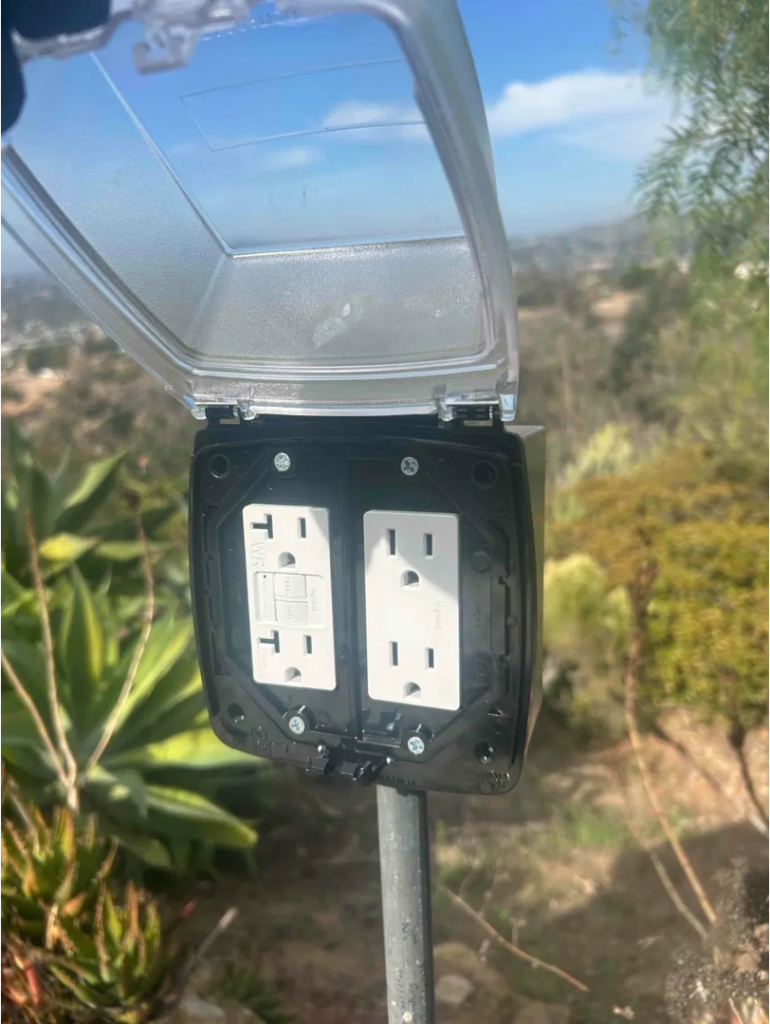
Outdoor outlets require proper weatherproof GFCI protection to meet current safety standards.
If your home has two-slot outlets instead of the standard three-slot design, your electrical system is missing a ground wire. Grounding is a critical safety feature that provides a safe path for excess electrical current in the event of a fault. It protects you and your devices from dangerous surges.
Two-prong outlets were standard in homes built before the 1960s, and if your home still has them, the wiring behind those outlets likely doesn’t include a ground wire. Upgrading these outlets is a job for a licensed electrician, as it involves either running a new ground wire to each outlet or installing GFCI outlets, which the National Electrical Code allows as a legal replacement in ungrounded systems.
7. Circuit Breakers That Trip Repeatedly
A circuit breaker that trips occasionally is doing its job. One that trips repeatedly on the same circuit is signaling that something is drawing too much current or that there’s a fault somewhere in the wiring, and a failing outlet can absolutely be the cause.
Internal degradation in outlets can create resistance in the circuit, generating heat and causing irregular current draws that trigger the breaker. If your breaker keeps tripping on the same circuit, a licensed electrician should inspect the outlets and wiring on that circuit to identify the source of the problem before it gets worse.
When Should You Call a Licensed Electrician in San Diego?

San Diego’s trusted home specialists, ready to handle your electrical needs with care and expertise.
Outlet problems rarely announce themselves all at once. By the time the signs are obvious, the issue has usually been developing behind the wall for a while, which is why a prompt, professional replacement saves you from guesswork later.
At Point Loma Home Pros, our licensed electricians replace failing outlets, upgrade two-prong receptacles, and install GFCI protection across San Diego, with particular experience in older homes built before modern electrical code. If you have spotted any of the warning signs in this guide, schedule an inspection and we will sort out exactly what needs to be replaced.
Schedule your electrical inspection with Point Loma Home Pros today.
Frequently Asked Questions (FAQs)
How do I know if an outlet is dangerous?
An outlet is dangerous if it feels warm to the touch, shows scorch marks or discoloration, makes a buzzing or crackling sound, gives off a burning smell, or delivers even a mild shock. Any one of these signs is enough reason to stop using that outlet and have it inspected and replaced by a licensed electrician. You do not need multiple warning signs to take action.
How long do electrical outlets last?
Most standard electrical outlets last between 15 and 25 years under normal use, though outlets in high-traffic areas tend to wear out faster. The internal contact points degrade with repeated use, which is why an older outlet may start holding plugs loosely before showing any other visible sign of wear. If your home is more than 20 years old and the outlets have never been replaced, a walkthrough inspection by a licensed electrician is worth scheduling.
What is the difference between a GFCI and a standard outlet?
A standard outlet delivers power from the circuit to whatever is plugged into it, with no built-in protection against ground faults. A GFCI outlet constantly monitors the flow of electricity and cuts power almost instantly if it detects an imbalance, such as one caused by water contact. GFCI outlets are required by the National Electrical Code in any area where water may be present, including bathrooms, kitchens, garages, and all outdoor locations.
Is a sparking outlet always an emergency?
A very brief, small spark when first plugging something in can be a normal result of the circuit completing. A large spark, one accompanied by a popping sound or burning smell, or one that repeats each time the outlet is used, is a different situation entirely. Stop using that outlet immediately and have a licensed electrician inspect and replace it before restoring power to that circuit.
How much does outlet replacement cost in San Diego?
Outlet replacement in San Diego typically ranges from $175 to $450, depending on the type of outlet, existing wiring conditions, and whether any additional work is required. GFCI outlet replacement runs around $275. At Point Loma Home Pros, our licensed electricians serve homeowners across San Diego with transparent pricing and a clear estimate before any work begins.
*Note: All pricing and service information is for general guidance only and reflects typical estimates at the time of writing. Actual costs, scope, and timelines may vary based on the home’s condition, access, materials, project complexity, and local market factors. For more information on our services and current pricing, visit Point Loma Home Pros.