
Key Takeaways
- Ductless mini-splits beat window units on efficiency and installation quality, while window units win on upfront cost and install speed. The right pick comes down to how long you’ll stay in the home and how many rooms need cooling.
- Mini-splits carry SEER2 ratings of 18 to 30+ versus 9 to 14 for window units, using roughly half the electricity for the same cooling. They also reverse to provide heat, removing the need for a separate furnace.
- A window unit runs $150 to $800 (around $313 installed), while a mini-split runs $8,500 to $20,000 installed. The window unit’s low upfront price is its main advantage; the mini-split’s efficiency pays back over time.
- A window unit drops into a sash in under an hour without a permit, while a mini-split is a one- to three-day job for a licensed HVAC contractor that involves refrigerant lines, a dedicated circuit, and a permit.
- Point Loma Home Pros works on San Diego’s older, duct-free homes where mini-splits often fit best, handling the HVAC install along with any electrical panel work under one roof.
Mini-Split vs Window Unit: What Suits Your San Diego Home
Between a ductless mini-split and a window unit, the mini-split is the stronger long-term choice for San Diego homeowners, and the payoff shows up in three places: lower bills, room-by-room comfort, and year-round use from a single system.
The savings come first. A mini-split uses about half the electricity of a window unit for the same cooling, and for anyone running it six months a year, that gap adds up on every bill. Comfort follows close behind. Each indoor head runs on its own thermostat, so you keep the bedroom cool at night without paying to chill empty rooms, and it does the job quietly instead of rattling through on-off cycles all night.
Still, the right pick depends on your situation, so the sections below compare both systems on efficiency, cost, and installation, including why older San Diego homes choose Point Loma Home Pros for HVAC system services.

What is a Ductless Mini-Split?
A ductless mini-split is a two-part cooling and heating system. An outdoor condenser connects to one or more wall-mounted indoor units through a small refrigerant line that runs through a 3-inch hole in the wall. Each indoor head cools a specific zone and runs on its own thermostat, so you can keep the bedroom comfortable at night without paying to cool empty rooms.
Mini-splits work well in older San Diego homes that were built before central ductwork was standard. Many houses in Point Loma, Mission Hills, North Park and La Jolla fall into this category. Adding ducts often means tearing into ceilings and walls, which a ductless system avoids completely.
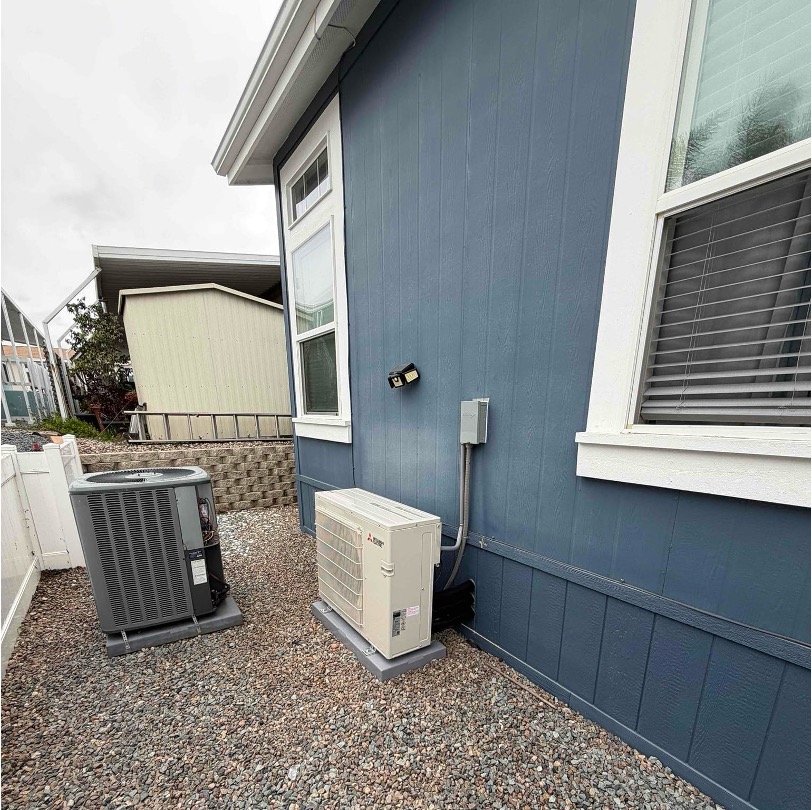
A ductless mini-split connects an outdoor condenser to indoor units via a small refrigerant line, enabling zone-specific temperature control.
What is a Window Unit?
A window air conditioner is a single self-contained box that mounts in a window or in a sleeve cut into an exterior wall. The compressor, evaporator, and fan all sit inside one housing. You plug it into a standard outlet, and it cools the room it sits in.
Window units are a familiar choice for renters, single rooms, or short-term use. Most basic models install in an afternoon with no professional help required. The trade-offs are noise, lower efficiency and limited cooling area.
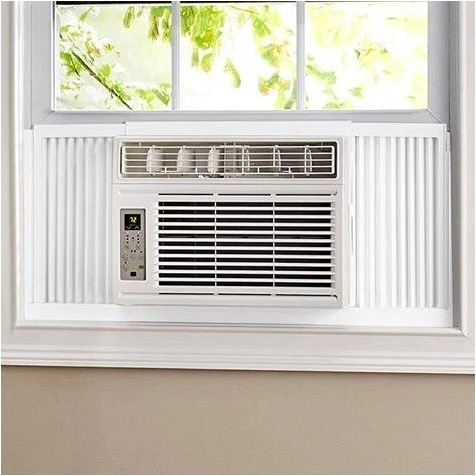
A window air conditioner is a self-contained, plug-in unit that cools single rooms, ideal for renters or short-term use.
Efficiency Comparison
Mini-splits use far less electricity than window units to produce the same cooling effect. Modern ductless systems have SEER2 ratings ranging from 18 to 30+.
Window units are rated on a different scale: CEER (Combined Energy Efficiency Ratio), the metric the DOE uses for room air conditioners. Most models on the market today fall roughly between 9 and 14 CEER.
SEER2 measures cooling output per watt of electricity, so a higher number means more cooling for less power. A mini-split rated SEER2 22 uses roughly half the electricity of a window unit rated CEER 11.
Two design choices drive the gap. First, mini-splits use variable-speed inverter compressors that adjust output continuously to match the room’s load. Window units cycle fully on and off, wasting energy at every restart and creating noticeable temperature swings between cycles. Second, mini-splits have no ducts to leak through, and their indoor heads pull return air directly from the room they cool.
For a San Diego homeowner running the cooling six months a year, the difference in the bill adds up. ENERGY STAR reports that ductless heat pumps can cut cooling energy use by 30 percent or more compared with standard room air conditioners. Mini-splits also reverse to provide heat in winter, which removes the need for a separate furnace or space heaters on cool San Diego nights.
Cost Comparison
Window units have the lowest upfront cost. A basic unit runs $150 to $800, depending on BTU rating and features, with most homeowners paying around $313 for the unit plus professional installation. Smaller 5,000 to 8,000 BTU models sit at the low end of that range, while larger 12,000 to 18,000 BTU units reach the upper end.
Mini-split installation is a larger investment. Pricing ranges from $8,500 to $20,000, depending on the number of indoor zones, the size of the home, and site conditions. A single-zone system sits at the lower end; a multi-zone setup covering three or four rooms in a 1,800-square-foot home reaches the upper end. Credible HVAC companies such as Point Loma Home Pros offer payment plans starting at $99 per month for homeowners who prefer to spread the cost.
Installation Comparison
A window unit takes 30 to 60 minutes to install. You lift the unit into a partially open window, lower the sash onto the top flange, extend the accordion side panels to seal the gap and plug into a standard 120-volt outlet. Larger units above 12,000 BTUs may need a 240-volt outlet and a dedicated circuit, which means an electrician. The downsides are real: the window stays blocked for the season, the seal around the unit lets in air and noise, and the open sash creates a security weak point.
A mini-split install is a one to three-day job for a licensed HVAC contractor. The steps include sizing the system with a Manual J load calculation, mounting each indoor head on an interior wall, drilling a 3-inch penetration through the exterior wall, setting the outdoor condenser on a pad or wall bracket, running insulated copper refrigerant lines and a condensate drain through the wall cavity, wiring a dedicated 240-volt circuit from the panel, vacuum-testing the refrigerant lines and commissioning the system.
San Diego requires permits for mini-split installations, and most older homes need an electrical panel inspection before adding a new circuit. Refrigerant handling is regulated by the EPA and calls for Section 608 certification. This is not a DIY job, and a poor installation voids the manufacturer’s warranty on most equipment, including Mitsubishi equipment.
Mini-Split vs Window Unit: Comparison Table
| Feature | Ductless Mini-Split | Window Unit |
|---|---|---|
| Upfront Cost | $8,500 to $20,000 installed | $150 to $800 (unit only) |
| SEER2 Efficiency | 18 to 30+ | 9 to 14 |
| Cooling Area | Single room to whole home (zone-dependent) | One room |
| Heating Capability | Yes (heat pump) | No (cooling only) |
| Indoor Noise | 19 to 32 dB | 50 to 60 dB |
| Window Use | Window stays free | Blocks window |
| Permits | Usually required | None |
Why Point Loma Home Pros Is the Right Call for Your Mini-Split

Point Loma Home Pros offers expert mini-split installation backed by a certified, experienced team serving San Diego’s older homes.
For a San Diego homeowner sizing up a mini-split against a window unit, the install quality matters as much as the equipment. A poorly sized or badly charged system loses much of the efficiency advantage that makes mini-splits worth the upfront cost in the first place. That’s the gap we close.
At Point Loma Home Pros, we are a Mitsubishi Electric Diamond Elite Dealer, the highest factory designation in the brand, and our 50-person team handles load calculations, permits, refrigerant work, and commissioning in-house. That range earns its keep in older neighborhoods like Point Loma, Mission Hills, North Park, and La Jolla, where adding a new circuit often means panel work right alongside the HVAC install. Book a free in-home consultation with us and you’ll get a properly sized quote, not a rough guess.
Frequently Asked Questions (FAQs)
How long does a mini-split last in San Diego’s climate?
A properly installed mini-split lasts 15 to 20 years in San Diego. The mild coastal climate is gentler on equipment than inland desert areas. Annual maintenance, including coil cleaning and refrigerant checks, keeps the system running at near-peak efficiency throughout its full service life.
Can I run a mini-split on solar power?
Yes. Mini-splits pair well with solar PV systems because they run on standard 240V electricity and use far less energy than central AC. Many homeowners size their solar array to cover cooling, heating and general household use, which can lower or eliminate monthly utility costs.
Do window units lower my home’s value?
Window units usually have a neutral or slightly negative effect on home value. Appraisers and buyers see them as temporary fixes rather than permanent climate control. A ductless mini-split, by contrast, is treated as a permanent HVAC upgrade and can add to appraised value, especially in older homes without existing central air.
Are mini-splits noisy?
No. Modern ductless indoor units run at 19-32 decibels on low fan speed, which is comparable to a quiet library/whisper. Window units typically register 50 to 60 decibels, similar to a running dishwasher. The outdoor condenser of a mini-split is also quieter than most central AC condensers.
Why should I hire Point Loma Home Pros to install my mini-split?
Point Loma Home Pros is a Mitsubishi Electric Diamond Elite Dealer with a 50-person multi-trade team and 2,000+ five-star reviews. Point Loma Home Pros focuses on older San Diego homes, handles permits and installation in-house, and backs every install with The Home Care Club for ongoing maintenance and priority service.
*Note: All pricing and service information is for general guidance only and reflects typical estimates at the time of writing. Actual costs, scope, and timelines may vary based on the home’s condition, access, materials, project complexity, and local market factors. For more information on our services and current pricing, visit Point Loma Home Pros.