Key Takeaways
- Replacing a central air conditioner before it fails completely avoids emergency breakdowns and the steeper costs of last-minute repairs or replacements.
- Most central AC units last 10 to 20 years, with maintenance, local climate, and build quality determining where a given system falls in that range.
- The $5,000 Rule flags when replacement beats repair: multiply the unit’s age by the repair cost, and anything over $5,000 favors a new system.
- Units still running on R-22 (Freon) refrigerant are strong replacement candidates, since the EPA banned its production in 2020 and the remaining supply now comes from costly reclaimed stock.
- Point Loma Home Pros handles full central AC replacements across San Diego, with licensed technicians, upfront pricing, and a satisfaction guarantee on every job.
Central Air Conditioners Rarely Fail Without Warning
Central air conditioners rarely quit without warning. Rising energy bills, uneven cooling, and repairs that keep coming back are usually the first signs that a system is nearing the end of its useful life, not a sudden breakdown out of nowhere.
Most homeowners wait until the AC stops working entirely before considering a replacement, which removes any chance to plan the timing or the budget. A breakdown in the middle of summer also means paying peak-season rates and living without cooling while technicians work through a backlog of emergency calls. Spotting the early signs gives homeowners the option to replace on their own schedule instead of someone else’s.
Getting the timing right also depends on getting the sizing right. Point Loma Home Pros evaluates the current system and the home itself before recommending a replacement, so homeowners in Point Loma, La Jolla, North Park, and other San Diego neighborhoods full of older homes end up with a unit built for their space rather than a like-for-like swap of an outdated one.
What Is the Lifespan of a Central Air Conditioner?
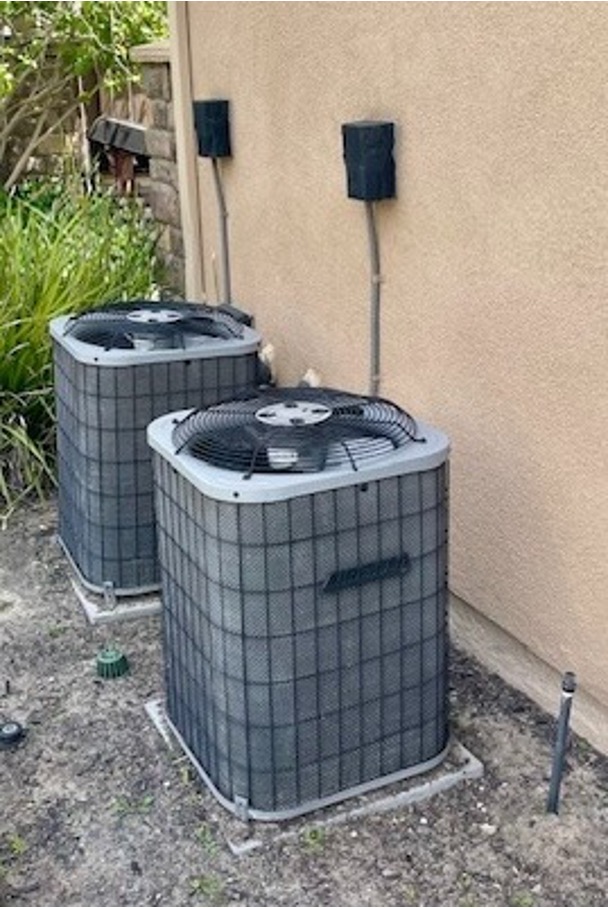
A central air conditioner may last for one to two decades.
A central air conditioner typically lasts between 10 and 20 years. The wide range comes down to three key factors: how well the unit has been maintained, how hard the local climate pushes it, and the build quality of the unit itself.
Under optimal conditions (annual tune-ups, regular filter changes, moderate climate), a well-made unit can push toward that 20-year mark. Without consistent maintenance in a hot, humid environment, 10 to 12 years is more realistic.
Modern air conditioners (units manufactured in the last decade) tend to outlast older models. Older units often hit their functional limit around 10 to 12 years. Newer systems, built with better materials and more efficient components, more commonly reach the 15- to 20-year range, provided they’re properly cared for.
What Are the Signs to Replace Your Central AC?
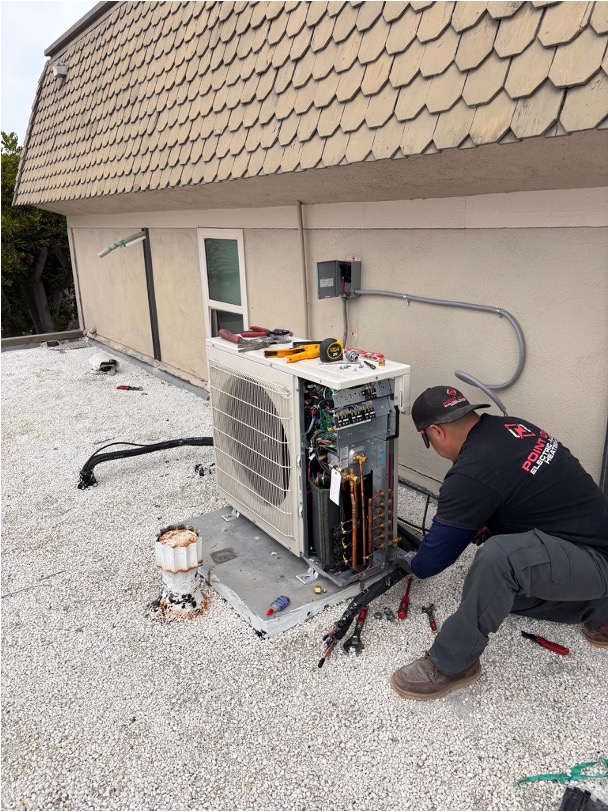
There are telltale signs that show that your central air conditioner should be replaced.
1. Your Unit Is 10+ Years Old
Once your central AC crosses the 10-year threshold, it’s time to start paying close attention. As units age, replacement parts become increasingly scarce. This is especially common in San Diego’s older homes, where original AC systems are often decades old, and manufacturers have long since stopped producing components for those discontinued models.
If your unit is 15 years or older and experiencing any of the other signs on this list, replacement is almost always the smarter financial decision.
2. Repairs Are Becoming Frequent and Costly
One small repair every few years is completely normal. What’s not normal is finding yourself calling an HVAC technician multiple times in a single season.
When repairs start stacking up, use the $5,000 Rule to guide your decision by multiplying the unit’s age by the cost of the repair. If that number exceeds $5,000, replacement is the better investment. Continuing to patch an aging system is often just delaying an inevitable and more expensive failure.
3. Your Energy Bills Keep Climbing
An air conditioner that’s losing efficiency cools your home less effectively and costs you more every single month to do it. As internal components wear down, the system has to run longer and harder to reach the same temperature, driving up your electricity bill.
If you’ve noticed a steady year-over-year increase in your summer energy costs without a change in usage habits, your AC’s declining efficiency is likely the culprit.
4. Your Home Won’t Cool Down Evenly
Hot spots in some rooms while others stay comfortable are a classic sign of a struggling central AC system. Uneven cooling happens when the unit can no longer generate enough capacity to push conditioned air consistently through the entire duct system. It can also point to failing components like a weakening blower motor or a refrigerant leak, reducing the system’s ability to absorb heat properly.
If adjusting vents and replacing filters doesn’t fix the problem, the issue is almost certainly internal. In an aging unit, internal problems rarely get cheaper to fix.
5. The Unit Makes Strange Noises or Smells
A healthy central AC runs with a steady, quiet hum. If you start hearing banging, grinding, squealing, or rattling, something mechanical has failed or is close to failing.
Unusual smells are just as serious. A musty odor points to mold inside the unit or ductwork, while a burning smell suggests an electrical issue or an overheating motor. A sweet chemical smell often means a refrigerant leak, which affects both performance and indoor air quality.
In a newer system, these problems are usually repairable at a reasonable cost. In a unit that’s 12 to 15 years old, they’re often the tipping point toward replacement.
6. Humidity Levels Feel Out of Control Indoors
Central air conditioners cool the air and dehumidify it. As warm air passes over the evaporator coil, moisture is pulled out and drained away. When a unit starts aging or malfunctioning, this dehumidification process breaks down.
You’ll notice it as a sticky, clammy feeling indoors even when the temperature reads correctly on the thermostat. Persistent high indoor humidity also encourages mold growth, which creates a separate and serious health problem. If your home feels humid despite the AC running continuously, the system is no longer doing its full job.
7. Your AC Uses R-22 Refrigerant (Freon)
R-22 (Freon) was the standard refrigerant in central air conditioners for decades. The Environmental Protection Agency (EPA) banned its production and import as of January 1, 2020, due to its ozone-depleting effects. No new R-22 is being made anywhere in the United States.
If your unit still runs on R-22 and develops a leak, the only supply left comes from reclaimed stockpiles at sharply inflated prices. Recharging the system can cost several times what it did just a few years ago. In nearly every case, replacing an R-22 unit is the smarter financial move.
8. Replacement Parts Are No Longer Available
Once a model has been discontinued for several years, manufacturers wind down parts production, and eventually, even a skilled HVAC technician can’t fix what they can’t source parts for.
If your technician is telling you that components for your unit are backordered indefinitely, discontinued, or only available through third-party suppliers at a significant markup, that’s a clear sign the industry has moved on from your system, and it may be time for you to do the same.
A Failing Central AC Meets Its Match in Point Loma Home Pros
If you need to replace your central air conditioner, Point Loma Home Pros can help.
An aging central AC rarely gets better on its own. If your system is showing multiple warning signs from this list, the math almost always favors replacement over continued repairs. The sooner you address it, the sooner your home stays cool without the rising costs and surprise breakdowns.
At Point Loma Home Pros, we handle central AC replacements across San Diego from start to finish. As a Diamond Elite Level Dealer for Mitsubishi Electric and American Standard, the highest factory designation available, our licensed technicians evaluate your current setup, size the right system for your home, and complete the installation with upfront pricing and a satisfaction guarantee. Book your AC assessment today and find out exactly where your system stands.
Frequently Asked Questions (FAQs)
How long does a central air conditioner last?
A central air conditioner typically lasts between 10 and 20 years. Units that receive annual professional tune-ups, regular filter changes every 1 to 3 months, and consistent coil cleaning tend to reach the higher end of that range. Units that go years without maintenance in hot, humid climates often fall closer to the 10- to 12-year mark.
How do you maintain a central air conditioner?
The single most impactful thing you can do yourself is change the air filter regularly: every 1 to 3 months, depending on household conditions like pets, dust levels, and how often the system runs. Beyond that, keep the outdoor condenser unit clear of debris, leaves, and overgrown vegetation, maintaining at least 2 feet of clearance on all sides for proper airflow. Clean the condenser coils annually and ensure the condensate drain line isn’t clogged, which can cause water damage and humidity problems indoors.
How much does a central AC consume per hour?
Central air conditioner energy consumption depends primarily on the unit’s tonnage and its SEER2 efficiency rating. A typical 3-ton residential unit running at around 3,500 watts consumes roughly 3.5 kilowatt-hours (kWh) per hour of operation. At the U.S. average electricity rate, that translates to real costs that add up quickly over a full cooling season.
How do you replace a central air conditioner?
Central AC replacement requires a licensed HVAC specialist with EPA Section 608 certification to legally handle refrigerants. The process includes removing the old condenser and air handler, recovering the refrigerant, installing the new equipment, pressure-testing the lines, and verifying correct airflow before the job is complete. Proper sizing based on your home’s square footage, insulation, and duct layout is critical to avoid short-cycling and poor dehumidification.
Can Point Loma Home Pros replace my central air conditioner?
Yes. Point Loma Home Pros provides full central AC installation and replacement across San Diego. Our licensed technicians evaluate your home’s cooling needs before recommending the right system size and model. All work comes with upfront flat-rate pricing and a satisfaction guarantee. We also provide flexible pricing plans that start at $99/month.
*Note: All pricing and service information is for general guidance only and reflects typical estimates at the time of writing. Actual costs, scope, and timelines may vary based on the home’s condition, access, materials, project complexity, and local market factors. For more information on our services and current pricing, visit Point Loma Home Pros.