Key Takeaways
- Sewer line inspection costs in San Diego vary based on cleanout access, pipe length, and hillside terrain, with related repairs ranging from $89 and up for drain cleaning to $5,000 to $30,000 for trenchless sewer repair.
- A professional sewer inspection works in four steps, starting with locating the cleanout, then inserting a self-leveling high-resolution camera, marking defect locations with a locator transmitter, and delivering a written report with video footage.
- Watch for warning signs that include slow drains across multiple fixtures, sulfur-like odors near drains or in the yard, backups affecting more than one fixture, and unexplained wet patches or sinkholes in the lawn, each signaling that a sewer scope should be scheduled soon.
- Finding the best sewer inspection company in San Diego means confirming an active CSLB C-36 Plumbing Contractor license, professional-grade camera and locator equipment, and direct experience with the cast iron, clay, or Orangeburg pipes common in older homes.
- Point Loma Home Pros serves Point Loma, La Jolla, Mission Hills, North Park, and surrounding San Diego neighborhoods with decades of hands-on experience, licensed plumbers, and a repair-first approach to every sewer line inspection.
What Should You Know Before Booking a Sewer Inspection?
A sewer line inspection is one of the smartest investments a San Diego homeowner can make, especially in older neighborhoods where cast iron, clay, and Orangeburg pipes are still hiding beneath the soil. Costs vary based on cleanout access, pipe length, and hillside terrain, with related repairs ranging from $89 for drain cleaning to $5,000–$30,000 for trenchless sewer repair.
At Point Loma Home Pros, we have handled this work across Point Loma, La Jolla, Mission Hills, and North Park for decades, taking a repair-first approach that gives homeowners honest documentation and a clear plan based on what their line actually needs.
The inspection itself is straightforward. A licensed plumber locates your cleanout, feeds a high-resolution self-leveling camera into the line, marks any defects with a locator transmitter, and delivers a written report with video footage.
To get accurate results, look for a contractor with an active CSLB C-36 Plumbing Contractor license, professional-grade camera and locator equipment, and direct experience with San Diego’s older housing stock.
How Much Does a Sewer Line Inspection Cost in San Diego?
Sewer inspection pricing in San Diego varies based on property conditions. Factors that influence cost include cleanout access (limited access may require removing a toilet or using a roof vent stack), pipe length, and hillside terrain common in neighborhoods like La Jolla and Clairemont.
Some companies bundle the inspection with a written estimate for repairs at no extra charge, while others charge separately for video footage or locator mapping.
Here are typical ranges for sewer-related repairs in San Diego:
- Drain Cleaning: $89+
- Water Jetting: $599–$1,200
- Sewer and Drain Jetting: $1,200–$3,000
- Trenchless Sewer Repair (including sewer lining): $5,000–$30,000
- Whole House Repipe: $15,000–$30,000
Catching a root intrusion early, when it is just starting to restrict flow, often means a jetting service resolves the problem. Waiting until roots crack the pipe joint pushes the repair into spot excavation or relining territory.
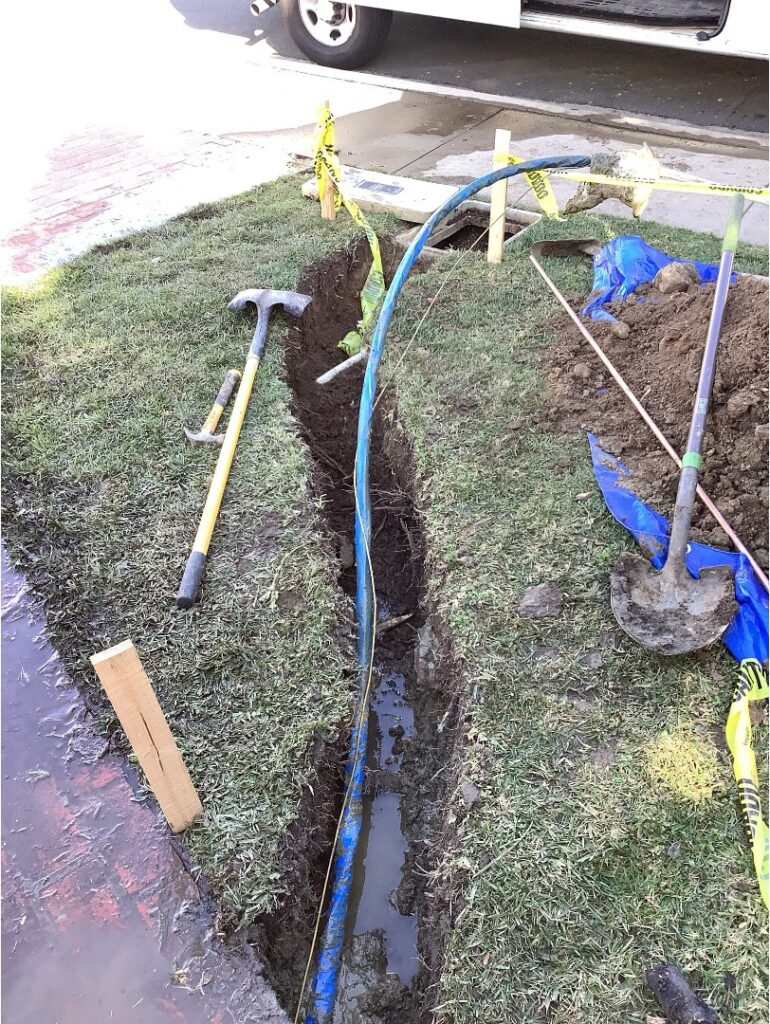
Catching sewer issues early through a camera inspection helps homeowners avoid the higher cost and disruption of full excavation.
How Does a Sewer Line Inspection Work?
Most homeowners have little visibility into what happens during a sewer scope, which makes it difficult to know whether the job was thorough or rushed.
- Locating the Cleanout Access Point: Before any camera goes into the ground, the technician locates the cleanout, a capped pipe that provides direct access to the sewer lateral. In San Diego, homes built after the 1980s typically have a white or black PVC cap near the foundation or in the yard. Older homes may have cast-iron cleanouts that are partially buried or, in some cases, no exterior cleanout at all, requiring access to the line through a toilet or roof vent stack.
- Camera Insertion & Live Video Feed: Once access is established, the technician feeds a flexible fiber optic camera on a long cable into the pipe. The camera transmits a high-definition video feed to a monitor above ground. A quality inspection uses a self-leveling camera head so the footage stays oriented correctly through every bend, giving an accurate view of pipe walls, joints, and any obstructions as the cable advances toward the municipal main.
- Defect Identification & Location Marking: As the camera travels along the line, the technician notes defects such as root intrusions, cracks, offset joints, and buildup, and records the exact footage distance at which each issue appears. Better inspection services pair the camera with a locator transmitter, allowing the technician to mark the ground directly above the problem area. This mapping step matters when repairs follow, since it allows a crew to dig once and hit the right spot the first time.
- Written Report & Video File Delivery: A professional inspection concludes with a written report that documents each defect by type, distance from the access point, and severity, along with a copy of the recorded video.
What the Camera Actually Finds
The most common findings in San Diego inspections are root intrusion, pipe corrosion, offset joints, and grease buildup.
Root Intrusion
Root intrusion is most common in neighborhoods with mature landscaping, such as Mission Hills, South Park, and Normal Heights. Roots follow moisture, and even a hairline crack in a pipe joint is enough of an entry point.
Early-stage intrusion can usually be handled with hydro jetting or mechanical cutting, while roots that have already cracked or offset a joint require spot excavation or relining.
Pipe Corrosion & Scaling
Corrosion is especially common in homes with cast-iron or galvanized-steel pipes. Over decades, the interior walls develop rust scaling that narrows the flow channel, and in severe cases, the buildup resembles stalactites projecting inward.
Light to moderate scaling can often be cleared with jetting, whereas severe corrosion requires relining or replacement.
Offset Joints & Collapsed Sections
Offset joints occur when two sections of pipe shift out of alignment, creating a ledge that catches debris and blocks flow. Seasonal soil movement is a common cause in San Diego.
A partial offset can sometimes be addressed with spot relining, while a fully collapsed section requires excavation and pipe replacement at that location.
Grease Buildup & Blockages
Grease accumulation is largely a kitchen habit issue. Cooking fats poured down the drain cool and solidify on pipe walls, gradually building a coating that restricts or fully blocks flow.
Hydro jetting clears it effectively, though recurring buildup suggests the need for longer-term behavioral changes.
How to Find the Best Sewer Inspector in San Diego
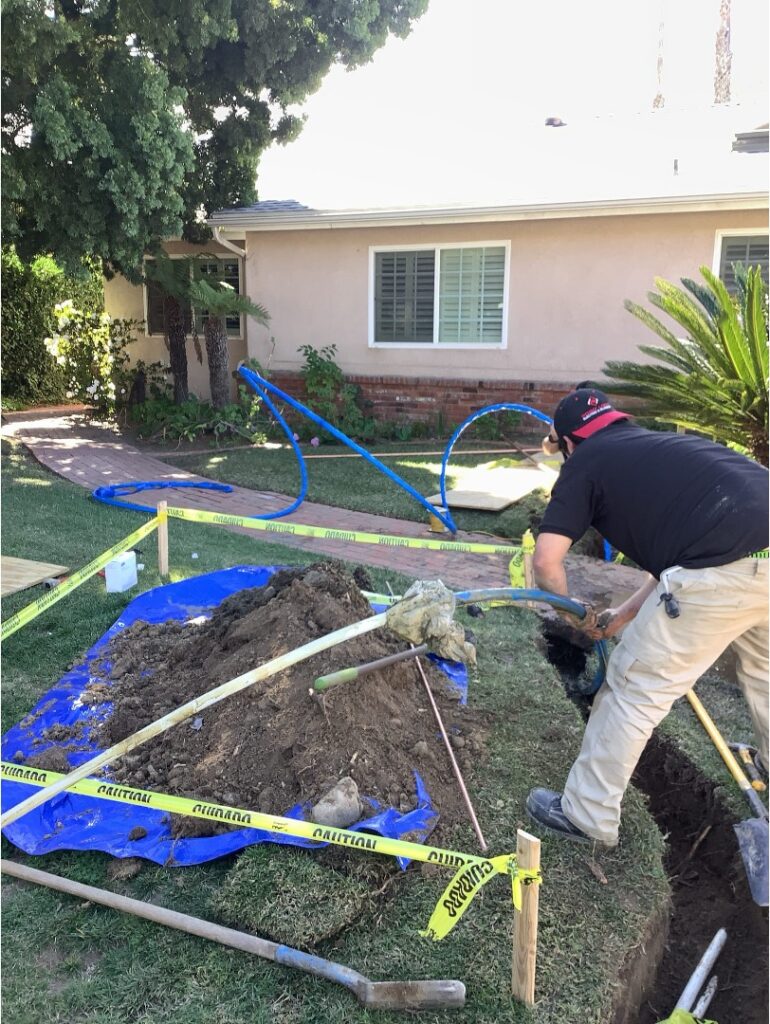
Hiring a licensed local team with experience in San Diego homes ensures sewer work is handled safely and to code from inspection through repair.
1. Verify CSLB C-36 Licensing & Insurance
Confirm the contractor holds an active CSLB C-36 Plumbing Contractor license before booking any sewer work in California. You can verify any license in under two minutes at the California Contractors State License Board website (cslb.ca.gov).
Beyond the C-36 license, confirm the company carries both general liability insurance and workers’ compensation coverage.
2. Ask About Camera Quality & Locator Capability
Equipment directly affects the accuracy of your inspection. A high-resolution self-leveling camera paired with a locator transmitter is the professional standard, since the transmitter allows the technician to mark the ground directly above any defect.
3. Look for Local Experience With Older San Diego Homes
Sewer systems in older neighborhoods like Point Loma, Mission Hills, and North Park often involve cast iron, clay, or Orangeburg pipe that newer contractors may not recognize on camera.
A company with local experience will know which pipe materials to expect, how San Diego’s soil conditions affect buried lines, and how to communicate findings clearly to homeowners and real estate agents.
Point Loma Home Pros: Trusted Sewer Line Inspection Experts in San Diego
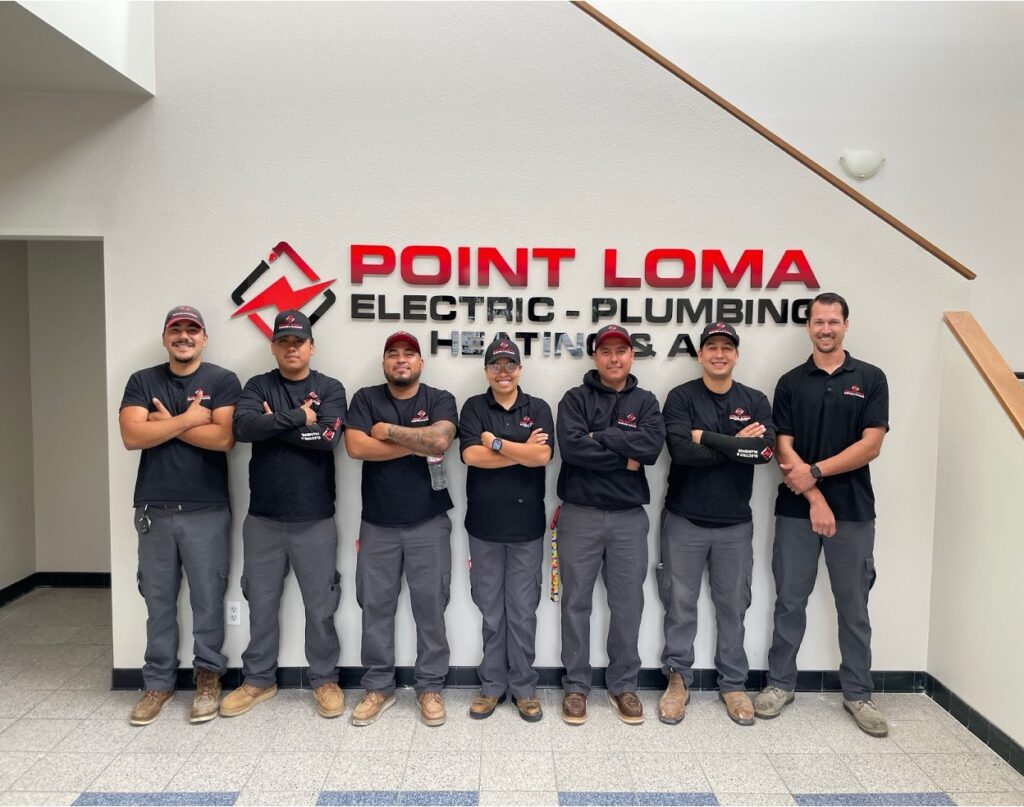
The Point Loma Home Pros team brings decades of combined experience to every sewer inspection across San Diego.
A thorough sewer line inspection gives San Diego homeowners the clarity to act early, prevent costly excavation, and protect older pipe systems before small issues turn into emergencies.
At Point Loma Home Pros, we bring decades of local experience and a repair-first mindset to every inspection across Point Loma, La Jolla, Mission Hills, and North Park, helping you understand exactly what your line needs now and what can wait. If you want to schedule a sewer line inspection with a licensed local team, our plumbers are ready to help.
Schedule your sewer line inspection with Point Loma Home Pros today.
Frequently Asked Questions (FAQs)
How long does a sewer line inspection take in San Diego?
A standard residential sewer camera inspection usually takes between 30 and 60 minutes from arrival to completion. Longer lateral lines, difficult cleanout access, or severely blocked pipes can push the time closer to two hours.
Do I need to be home during the inspection?
It is strongly recommended that you or a trusted representative be present. Watching the live camera feed with the technician lets you ask questions in real time and receive immediate explanations of any findings before the written report is finalized.
Can a sewer camera inspection detect every type of problem?
A camera inspection reliably identifies blockages, root intrusion, cracks, corrosion, offset joints, grease buildup, and collapsed sections, essentially any defect that produces a visual change inside the pipe.
For suspected external issues such as soil voids or early-stage external corrosion, a hydrostatic pressure test is sometimes used alongside the camera to confirm leaks that are not visible from the interior.
How often should San Diego homeowners schedule a sewer inspection?
For homes built before 1980, an inspection every 2 to 3 years is a reasonable maintenance interval, and annually if there are large trees near the sewer lateral or a history of plumbing issues.
Newer homes with PVC pipe can generally go every 2 years between inspections, though recurring slow drains, backups, or unexplained yard moisture should prompt one right away.
Is a sewer inspection worth it on a newer home?
Yes. Even on newer PVC lines, construction defects such as improper slope, misaligned connections, or a sagging section of pipe known as a “belly” are only detectable through a camera inspection.
For San Diego homeowners weighing the decision, Point Loma Home Pros offers camera inspection services that provide buyers with clear documentation before closing and help protect against costly surprises in the first few years of ownership.
*Note: All pricing and service information is for general guidance only and reflects typical estimates at the time of writing. Actual costs, scope, and timelines may vary based on the home’s condition, access, materials, project complexity, and local market factors. For more information on our services and current pricing, visit Point Loma Home Pros.