
Key Takeaways
- Ungrounded outlets in an older home are easy to identify by looking for two-prong receptacles or using a three-light outlet tester, but a licensed electrician should confirm the wiring before any fix is chosen.
- The most effective permanent fixes for ungrounded outlets are adding a dedicated grounding conductor, bonding to a verified metal conduit, or rewiring the circuit with modern grounded cable, each suited to a different home and wiring situation.
- When a true ground is not practical, a GFCI outlet or GFCI breaker provides code-compliant shock protection for an ungrounded circuit, though it does not create an actual equipment ground for electronics or surge protection.
- Ungrounded outlets carry a real shock and fire risk even when everything seems to work normally, which is why older San Diego homes with two-prong outlets or open-ground readings are worth inspecting and addressing properly.
- Point Loma Home Pros has spent over three decades working on the electrical systems found in San Diego’s older homes, and our licensed technicians handle everything from outlet grounding assessments to full rewiring safely and correctly.
What To Do If Old House Outlets Are Not Grounded?
Ungrounded outlets in an older home can be fixed by adding a true ground or, when that is not practical, protecting the circuit with a GFCI. The right solution depends entirely on how the home is wired, which is why a proper inspection always comes first.
These outlets are common in San Diego homes built before the early 1960s, and they carry a real shock and fire risk even when nothing seems wrong day to day. Spotting the problem is straightforward, but choosing and completing the fix safely requires a licensed electrician.
At Point Loma Home Pros, we have been working on the electrical systems in San Diego’s older homes for over three decades. From identifying ungrounded outlets to rewiring full circuits, our licensed technicians handle every step correctly and explain your options clearly before any work begins.

How to Tell If Your Outlet Is Ungrounded
You can spot the early signs yourself with two simple, no-contact checks. Anything beyond these means opening up the outlet, which is where a licensed electrician should take over.
1. Look for Two-Prong Outlets
This is the most obvious sign. Two-prong outlets have only a hot and a neutral slot, with no third opening for a ground. They are most common in older homes built before the early 1960s and usually point to wiring that has never been updated.
A two-prong outlet is a strong indication that the circuit is ungrounded, though the only way to confirm it is with a proper test.
2. Use a Three-Light Outlet Tester
A three-light outlet tester plugs directly into any three-prong outlet and gives you an instant readout. If the indicator shows “Open Ground,” the outlet has no working ground connection.
These testers are available at any hardware store, cost very little, and take only a few seconds to use. This is the safest way to check an outlet, since it requires no contact with any wiring.
3. A Closer Inspection Confirms It
Beyond those two checks, confirming the problem means removing the cover plate and the outlet to inspect the wiring, and often testing for continuity with a multimeter to see whether a metal conduit still provides a ground path.
This involves direct contact with the circuit, so it is work for a licensed electrician. During a visit, your electrician performs these checks safely, confirms whether a ground exists, and identifies which fixes your home needs.
3 Ways to Fix an Ungrounded Outlet
Once the problem is confirmed, there are three ways to add a true ground. Each one suits a different home and wiring situation, and all of them require work for a licensed professional.
1. Add a Grounding Conductor
This solution runs a new dedicated ground wire from the outlet back to the panel’s grounding bus, giving the outlet a ground path for the first time. The challenge is getting that wire through finished walls.
Where there is an accessible attic or basement, the run is far simpler, while fully closed walls with no access above or below make the job more involved and more costly. The home’s layout largely determines how practical this option is, which is part of why an in-person evaluation matters.
2. Use Existing Metal Conduit as the Ground Path
In homes wired with rigid or intermediate metal conduit, the ground path may already exist. When that metal conduit runs continuously and is properly bonded back to the panel, it qualifies as an equipment grounding conductor under the National Electrical Code, and the outlet can be grounded by bonding it to the conduit system.
The catch is that the entire run has to be verified as continuous and intact, since any break, corrosion, or loose fitting compromises the path. That verification takes proper testing equipment, because a conduit ground that only looks intact can leave an outlet unprotected.
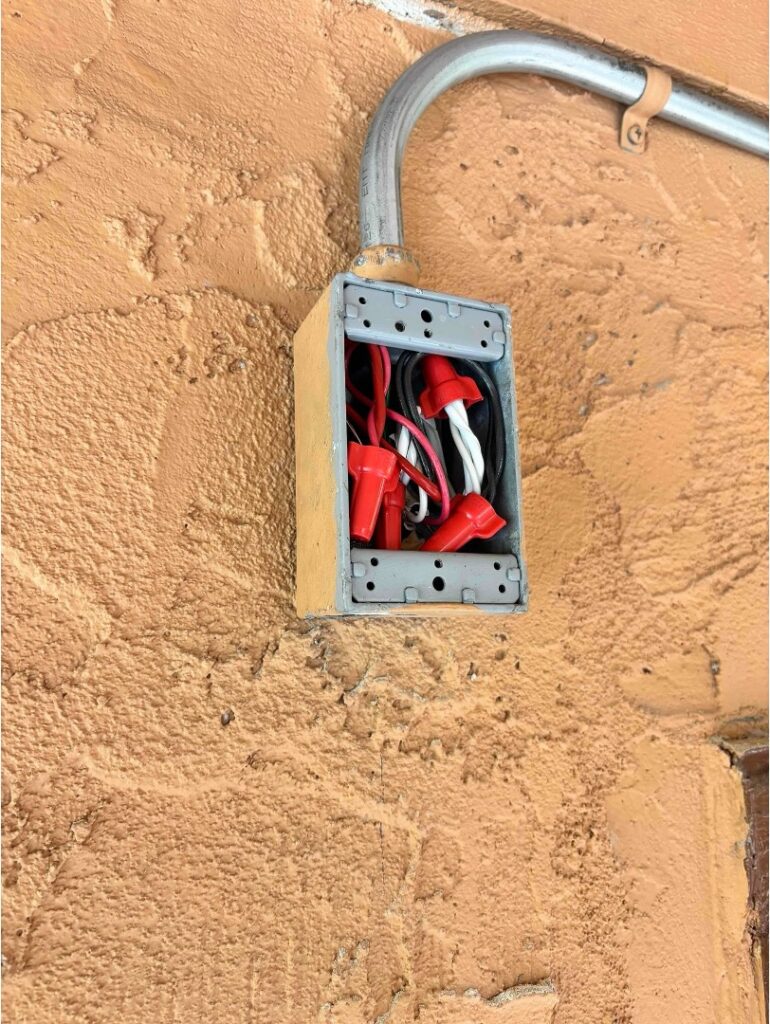
Where metal conduit runs continuously back to the panel, it can serve as the ground path an outlet needs.
3. Rewire the Circuit with Modern Grounded Cable
Full rewiring replaces the old two-wire cable with a modern grounded cable that includes a dedicated ground conductor.
It is the most comprehensive and permanent solution, and also the most involved, since it means opening walls, running new cable from the panel to each outlet on the circuit, and patching afterward. For older San Diego homes with outdated wiring throughout, this is often the solution that brings the whole system up to current standards.
Protection Options When Grounding Isn’t Practical
Running a new ground wire isn’t always feasible, especially in homes with plaster walls or knob-and-tube wiring. In these cases, the National Electrical Code permits GFCI protection as an alternative. It won’t create a true ground path, but it guards against the most dangerous outcome: electrocution.
1. Install a GFCI Outlet
A GFCI (Ground Fault Circuit Interrupter) outlet monitors the current between the hot and neutral wires and cuts power the instant it detects a small imbalance.
When an ungrounded outlet is replaced with a GFCI, the code requires it to be labeled “No Equipment Ground,” since the outlet is protected but still not grounded. One GFCI outlet can also protect other standard outlets downstream on the same circuit when wired correctly.
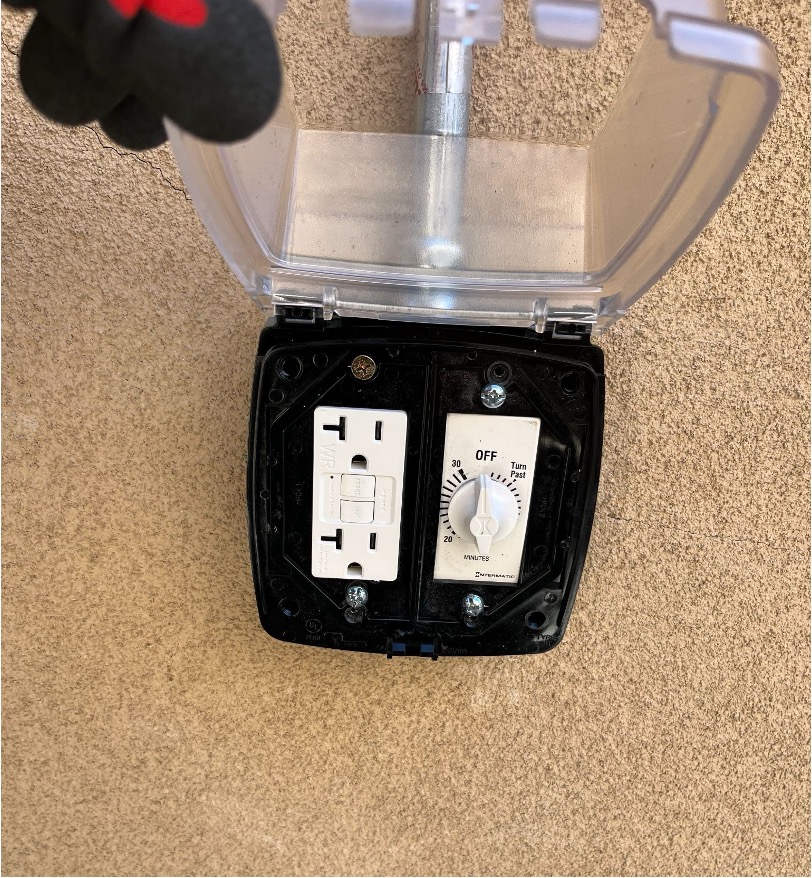
A GFCI guards against shock on an ungrounded circuit, even though it does not create a true ground.
2. Install a GFCI Breaker
A GFCI breaker installed at the panel provides the same protection for every outlet on the circuit at once. It is a cleaner solution than replacing individual outlets, particularly when several ungrounded outlets share a circuit. Since this work happens inside the main electrical panel, it is best handled by a professional.
Why Is Point Loma Home Pros Trusted for Older-Home Electrical Services in San Diego?

A trusted local team brings the experience older San Diego homes need for safe, lasting electrical work.
Ungrounded outlets are one of the most common safety gaps in older San Diego homes, and they do not resolve on their own. Whether the right fix is a dedicated grounding conductor, a conduit bond, or GFCI protection, the solution depends on how the home is wired and what the inspection actually finds.
At Point Loma Home Pros, we have spent over three decades working on the electrical systems that San Diego’s older neighborhoods were built on. Our licensed technicians assess your outlets honestly, explain every option clearly, and complete the work the way these homes require. If you want to get your outlets inspected and fixed correctly, schedule your service with us today.
Schedule your outlet installation with Point Loma Home Pros today.
Frequently Asked Questions (FAQs)
Can I use a three-prong outlet without a ground wire?
A three-prong outlet will still deliver power without a ground connected, so appliances run, and nothing seems wrong at first. The problem is that there is no safe fault path if something fails inside the device or the outlet, which is exactly where the danger lies.
The National Electrical Code only permits a three-prong outlet on an ungrounded circuit when it is protected by a GFCI and labeled “No Equipment Ground.”
Is it legal to have ungrounded outlets in an older home?
Yes, existing ungrounded outlets in older homes are generally grandfathered under current electrical codes, so you are not required to rewire simply because the home predates grounded wiring.
The moment you do electrical work on that circuit, though, such as replacing outlets or adding new ones, that work usually has to meet current code. Ungrounded outlets can also surface during a home sale, when buyers or lenders may require them to be addressed before closing.
Does a GFCI outlet replace the need for a true ground?
A GFCI outlet provides shock protection by cutting power the instant it detects a current imbalance, and the code accepts it as a compliant alternative where a true ground isn’t present.
It is not the same as a real ground, however. It won’t protect sensitive electronics from voltage spikes, won’t make surge protectors work correctly, and doesn’t give devices the equipment ground some of them need.
How much does it cost to ground outlets in an old house?
Costs depend on the solution, since a GFCI outlet sits at the lower end, while adding a grounding conductor or rewiring a circuit costs more. The condition of your existing wiring and how accessible it is are the biggest factors in any quote.
Point Loma Home Pros provides a clear assessment of your outlets and explains the cost of each option before any work begins. Attractive payment plans are also available, with options starting as low as $99 a month.
Can I use a surge protector on an ungrounded outlet?
A surge protector will fit and pass power on an ungrounded outlet, but the surge protection itself won’t work, because it relies on a ground to divert excess voltage during a spike.
Many surge protectors have a grounded indicator light that stays off in this situation, a sign the protection isn’t active. The real fix is to address the grounding first, after which a surge protector can do its job properly.
*Note: All pricing and service information is for general guidance only and reflects typical estimates at the time of writing. Actual costs, scope, and timelines may vary based on the home’s condition, access, materials, project complexity, and local market factors. For more information on our services and current pricing, visit Point Loma Home Pros.