
Key Takeaways
- A fuse box uses single-use fuses that melt and need replacing after every fault, while a circuit breaker panel uses resettable switches that restore power in seconds.
- Fuse boxes cap out around 60 amps with no Arc Fault Circuit Interrupter (AFCI) or Ground Fault Circuit Interrupter (GFCI) support, leaving them unable to handle EV chargers, modern HVAC, or solar.
- A breaker panel scales from 100 to 400 amps, supports AFCI and GFCI protection, and accommodates new circuits as your home’s needs grow.
- Many insurers decline, or surcharge homes with fuse boxes, and permitted electrical work can trigger a code requirement to upgrade the panel.
- At Point Loma Home Pros, we inspect your fuse box first, recommend a breaker panel upgrade only if it’s warranted, and handle the permits, install, and inspection as one team.
Fuse Box vs Circuit Breaker Panel: Which Is Better?
For most modern homes, a circuit breaker panel is the stronger choice. Both do the same core job, cutting power when a circuit overloads to prevent wiring from overheating, but they differ sharply in how they recover, how much capacity they carry, and what safety features they support.
Fuse boxes were standard in homes built before the 1960s and were sized for an era when a refrigerator and a few lights were the heaviest loads on the system. The biggest safety risk they carry today is overfusing: installing a higher-rated fuse than the circuit is wired for, which strips the protection entirely.
Point Loma Home Pros specializes in moving San Diego’s older homes from outdated fuse boxes to code-compliant breaker panels built for today’s electrical demands.

Fuse Box vs Circuit Breaker: The Core Differences
Mechanism
A fuse protects a circuit by using a metal filament that melts when the current exceeds its rating. Once it blows, you replace it. Circuit breakers do the same job, using an internal switch that trips on overload and resets with the flip of a handle.
A tripped breaker takes seconds to restore, while a blown fuse means finding a replacement before your power comes back.
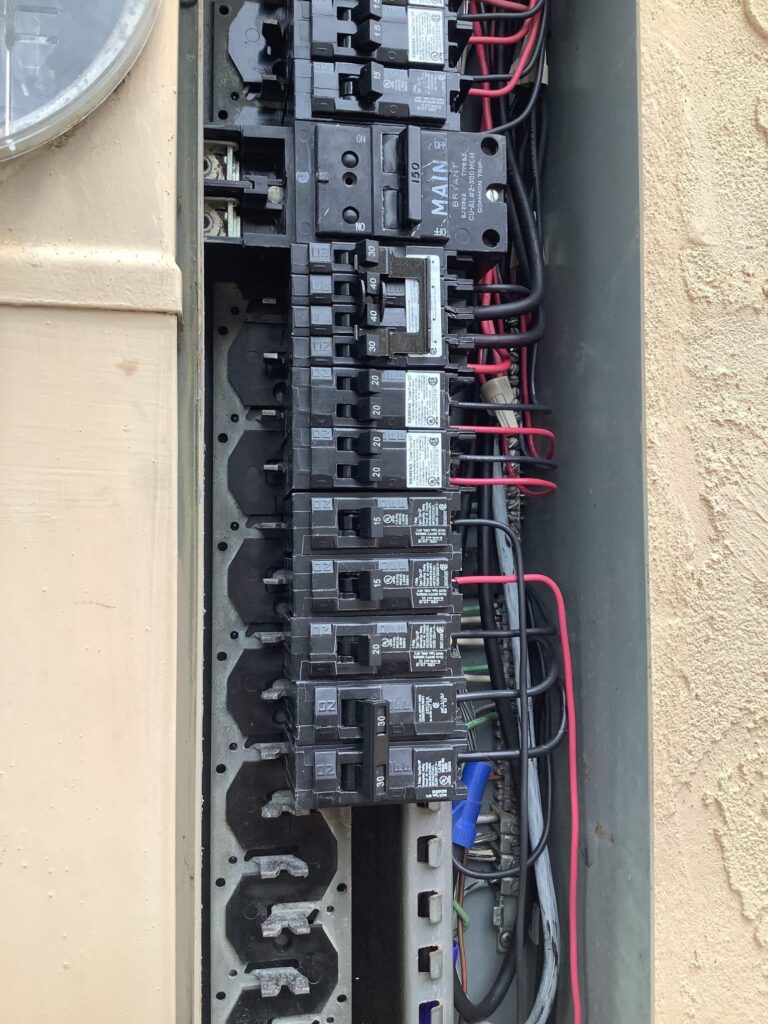
In a circuit breaker panel, each breaker controls one circuit and flips back on after it trips, while the main breaker at the top powers the entire panel.
Capacity
Most fuse boxes in older homes top out at 60 amps. That was plenty before central air, EV chargers, heat pumps, and electric dryers became standard loads.
Modern breaker panels start at 100 amps and commonly go up to 200 or 400 for larger homes.
Safety
Modern breaker panels support AFCI (Arc Fault Circuit Interrupter) breakers, which detect arcing faults that can start fires inside walls. The National Electrical Code now requires AFCI protection in bedrooms, living rooms, and most other living spaces in new construction. Fuse boxes cannot support this technology.
The major risk is overfusing. When a fuse blows repeatedly, some homeowners swap in a higher-rated fuse instead of fixing the problem. A 30-amp fuse on a 15-amp circuit lets the wiring carry twice its safe load, and it will overheat long before that oversized fuse blows.
Maintenance
Breakers are reusable, and panels can be expanded with new circuits as your needs grow. A breaker that trips often usually points to an overloaded circuit or a failing breaker, both easy for a licensed electrician to diagnose.
Fuse boxes need a stock of replacement fuses on hand. Older boxes may also have corroded sockets and deteriorating connections, and replacement parts for many models are no longer made.
Code Compliance & Insurance
Building codes generally don’t force you to replace a fuse box that’s already in place. But any permitted electrical work can trigger a requirement to bring the panel up to current standards.
The bigger pressure point for most homeowners is insurance. Many providers either refuse to write policies for homes with fuse boxes or charge higher premiums. If you’re buying or selling a home with a fuse box, expect it to come up during inspection.
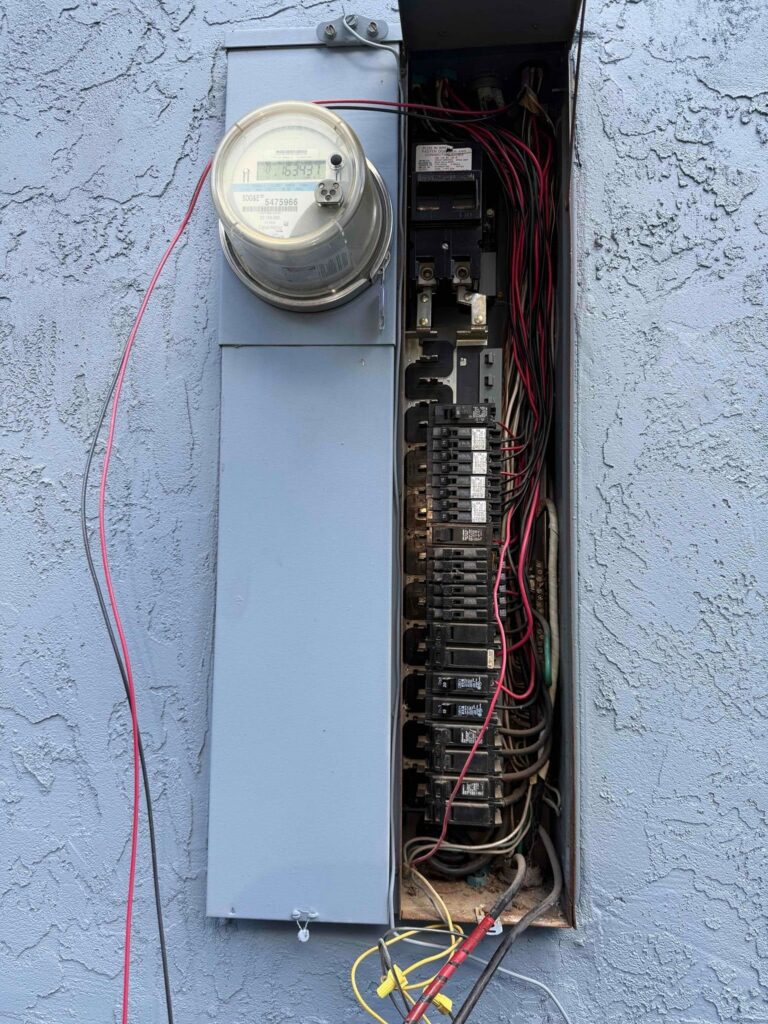
A breaker panel holds far more circuits and capacity than the fuse boxes it replaced in older homes.
Pros & Cons of a Fuse Box
Pros
- Individual fuses are inexpensive to buy and replace.
- Fuses respond very fast to fault conditions, sometimes faster than breakers.
- A small home with low electrical demand and a well-maintained fuse box can continue to run safely on one.
Cons
- Fuses burn out every time they blow and must be replaced.
- Standard plug fuses have no safeguard against installing a higher-rated fuse than the circuit can handle.
- Most fuse boxes max out at 60 amps, far below what a modern home needs.
- No support for AFCI or GFCI protection at the panel level.
- Replacement parts for older panels are increasingly hard to find.
- Cannot support EV chargers, modern HVAC systems, or other high-draw appliances.
Pros & Cons of a Circuit Breaker Panel
Pros
- Breakers reset in seconds with no replacement parts needed.
- Supports AFCI and GFCI breakers for code-compliant arc-fault and ground-fault protection.
- Capacity ranges from 100 to 400 amps, enough for any modern residential load.
- Panels can be expanded with new circuits as your needs grow.
- Compatible with EV chargers, solar systems, generators, and smart home technology.
- Preferred, and often required, by homeowners insurance providers.
Cons
- Upfront cost is higher since the job includes labor, permits, materials, and sometimes a service entrance upgrade.
- Aging breakers can develop nuisance tripping, which is an easy fix but requires a licensed electrician.
- A new panel does not fix old wiring like aluminum branch circuits or knob-and-tube, which carry their own risks.
Fuse Box vs Circuit Breaker Panel: Quick Comparison
| Feature | Fuse Box | Circuit Breaker Panel |
|---|---|---|
| How it works | Fuse melts and must be replaced | Breaker trips and resets with a switch |
| Typical capacity | 30 to 60 amps | 100 to 400 amps |
| AFCI/GFCI support | No | Yes |
| After an overload | Replace the blown fuse | Flip the breaker back on |
| Adding new circuits | Limited by panel size and design | Expandable with open breaker slots |
| EV/HVAC/solar ready | No | Yes |
| Insurance acceptance | Often denied or surcharged | Widely accepted |
| Replacement parts | Increasingly hard to find | Readily available |
Point Loma Home Pros: San Diego’s Trusted Panel Replacement Team
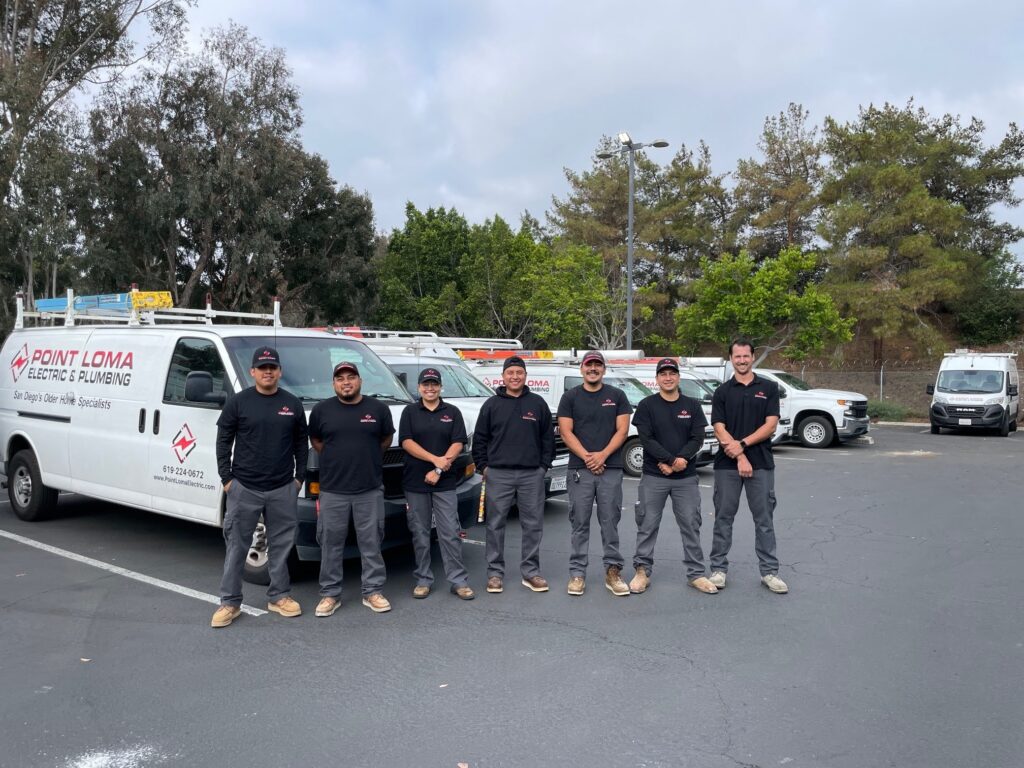
Point Loma Home Pros specializes in fuse box replacements for San Diego homes, delivering code-compliant breaker panels built for today’s electrical demands.
A fuse box can still run a small home safely, but it caps your capacity near 60 amps and offers none of the arc-fault or ground-fault protection a modern panel provides. A circuit breaker panel can be scaled to 100 amps and beyond and supports the EV chargers, HVAC systems, and appliances that homes rely on today. For most homeowners with an aging fuse box, the switch to breakers is about safety and capacity far more than convenience.
At Point Loma Home Pros, our licensed electricians move San Diego homes from outdated fuse boxes to code-compliant breaker panels, managing the permits, inspection, and utility coordination from start to finish. Serving the area since 1988, we know the older homes across these neighborhoods and what it takes to modernize them correctly. If you’re not sure what’s behind that metal panel on your wall, contact Point Loma Home Pros for an inspection and an honest recommendation.
Frequently Asked Questions (FAQs)
Can I replace a fuse box with a circuit breaker panel myself?
No, this is not a DIY project, even though the parts are sold at any supply house. Panel work connects directly to the service entrance, which carries live voltage that only your utility can shut off, and they do that only for a licensed electrician with the right permits. A miswired panel can also create arc faults that start fires inside walls, so this is work for a professional.
Is it illegal to have a fuse box in my home?
In most areas, having a fuse box is not illegal, because electrical codes generally aren’t retroactive and don’t force you to replace one already in place. That changes once you pull permits for electrical work, an addition, or a renovation, since an inspector may require the panel to meet current code as a condition of approval.
Will my insurance be affected if I have a fuse box?
Yes, and often noticeably. Many homeowners insurance providers either decline new policies for homes with fuse boxes or charge higher premiums for the added fire risk, especially with 60-amp service and original wiring. If you already have coverage, check your policy for electrical-fire exclusions and ask your agent exactly how the fuse box affects it.
How do I know if my home has a fuse box or a circuit breaker panel?
Find your panel, usually in a garage, utility room, basement, or hallway, and open the door. A row of flip switches means a circuit breaker panel, while round screw-in glass components or cartridge-style blocks mean a fuse box. If you can’t tell or aren’t comfortable opening the panel, a licensed electrician can quickly confirm it.
Why choose Point Loma Home Pros to replace my fuse box?
At Point Loma Home Pros, we start with an inspection and tell you straight if your fuse box needs replacing or still has safe life left, so you’re not pushed into work you don’t need. If a replacement is the right call, our licensed electricians handle the permits and inspection and complete the work to local code. Every installation is backed by our workmanship guarantee, so the panel is safe, correct, and covered.
*Note: All pricing and service information is for general guidance only and reflects typical estimates at the time of writing. Actual costs, scope, and timelines may vary based on the home’s condition, access, materials, project complexity, and local market factors. For more information on our services and current pricing, visit Point Loma Home Pros.