Key Takeaways
- A tankless water heater usually goes cold because of undersized capacity, mineral scale, cold water sandwiches, low gas supply, colder winter inlet water, or a cross-connection.
- Running a shower, faucet, and dishwasher together can exceed the unit’s gallons per minute (GPM) rating, which calls for a larger heater or a second unit in parallel.
- Limescale from hard water insulates the heat exchanger, and an annual professional descaling flush restores heating performance.
- Gas units can need up to 199,000 British Thermal Units (BTUs) per hour, so weak flame output calls for a licensed pressure test under full demand, not a DIY fix.
- At Point Loma Home Pros, we can diagnose the cause, handle repairs, or size a replacement matched to your San Diego home.
How Does a Tankless Water Heater Work?
A tankless water heater warms water on demand as it flows through a gas burner or electric element, so it never stores hot water in a tank. That design saves space and energy, but it also means output depends entirely on how much water is flowing, how much fuel reaches the burner, and how cold the incoming water is.
Keeping one running smoothly comes down to correct sizing, clean internals, and a steady fuel supply. A unit that works well on day one can still start going cold years later, because scale builds up slowly and new gas appliances may end up sharing the same line. That’s why problems tend to creep in gradually rather than appearing overnight.
Point Loma Home Pros installs, maintains, and repairs tankless systems in San Diego’s older homes, where original gas lines and plumbing often weren’t built for high-demand heaters, so each service call checks the supply side as well as the unit itself.
6 Common Causes & Fixes of Cold Water From a Tankless Heater
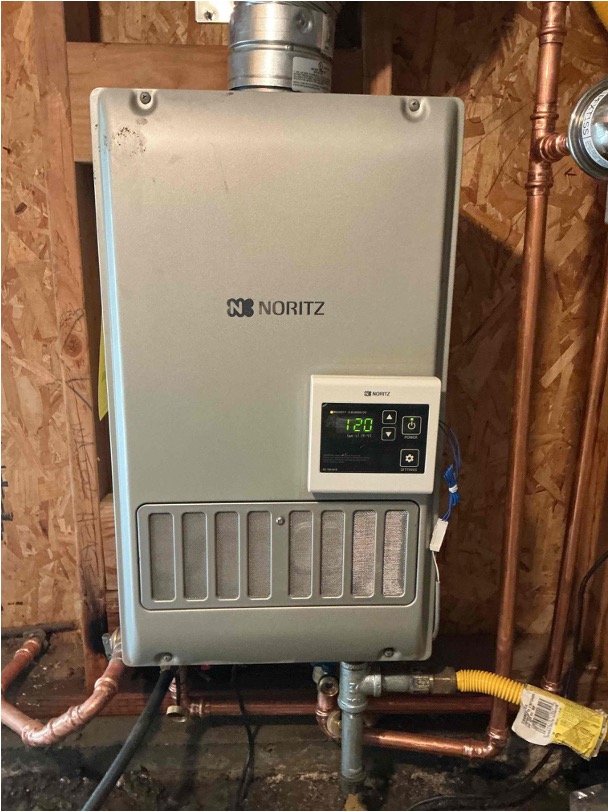
Fixing the cold-water problem of a tankless water heater depends on the cause.
1. The Unit Is Too Small for Your Home’s Demand
Every tankless water heater can only warm so much water at once, measured in gallons per minute (GPM). If your home uses more than the unit can handle, like running the dishwasher during a shower, output temperature drops.
This often happens with units never sized for real use. A shower, a faucet, and a dishwasher running at the same time add up fast. Older San Diego homes can draw even more, since many still have original high-flow showerheads and fixtures that use far more water than today’s California-standard models. Once you pass the unit’s limit, hot water runs out quickly.
What to Do
- Add up how much hot water you might use at once by combining the flow rates of every fixture running together.
- Compare that to your unit’s rated capacity.
If you regularly exceed it, you may need a larger unit or a second heater to share the load. A licensed plumber can measure your actual demand and recommend the right size.
2. Mineral Buildup Is Blocking Heat Transfer
Hard water is one of the biggest long-term enemies of tankless water heaters, and San Diego’s water is notably hard, so scale tends to build up faster here than in many parts of the country. When high-mineral water flows through the heat exchanger repeatedly, calcium and magnesium deposits (commonly called limescale) build up on the interior walls.
Over time, that scale layer acts as an insulator, reducing the unit’s ability to transfer heat efficiently to the water passing through it.
What to Do
Most manufacturers recommend descaling a tankless unit about once a year, and more often in homes with hard water. A professional flush circulates a descaling solution through the heat exchanger, clears the buildup, and gives our technicians a chance to check the burner, venting, and gas supply at the same time.
Installing a whole-home water softener or filtration system can also significantly reduce how often scale becomes a problem. At Point Loma Home Pros, our Home Care Club members get proactive maintenance and priority service, so annual flushes stay on schedule.
3. A Cold Water Sandwich Is Fooling Your Sensors
The cold water sandwich happens when you briefly turn off the hot tap and turn it back on. The leftover hot water in the pipes flows out first, followed by a cold slug that entered the heat exchanger before the burner had time to refire. That sudden cold burst mid-shower makes it feel like something is broken.
It’s actually how tankless systems work. The unit needs a minimum flow rate (typically around 0.5 GPM) to activate, and any pause lets cold water fill the exchanger until flow resumes.
What to Do
- If the cold sandwich is minor and predictable (only when you briefly shut off the tap), it may just be a behavior you adapt to.
- If it’s happening frequently or the cold burst is substantial, a recirculation pump can help by keeping a small loop of hot water moving through the pipes continuously. Some newer tankless models have built-in recirculation systems designed specifically to minimize this effect.
4. The Gas Line Can’t Supply Enough Fuel
Gas-powered tankless water heaters are high-demand appliances. A whole-home unit can require up to 199,000 BTUs per hour at full capacity, far more than most other household gas appliances.
If the gas line feeding your unit is undersized, corroded, or shared with too many appliances, the unit won’t get enough fuel to maintain a steady burn. The result is a heater that fires up, warms briefly, then drops output as the flame weakens.
This is especially common in older San Diego homes, where original gas lines were sized for a tank heater and a stove, not a high-demand tankless unit.
What to Do
This is not a DIY fix.
- Have a licensed gas technician run a pressure test at the unit while it’s operating at full demand.
- If readings fall below the manufacturer’s requirements, the technician can recommend upgrading or rerouting the supply line so the heater gets the fuel it needs.
5. Inlet Water Temperature Drops in Winter
Every tankless unit is rated to raise water by a set number of degrees (the temperature rise) at a given flow rate. When incoming water gets colder, the unit must deliver a bigger rise, leaving less capacity for flow.
In colder regions, that winter drop can be dramatic. San Diego’s mild coastal climate keeps the swing small, but even a modest dip means less headroom. A heater that already runs close to its limit may start delivering lukewarm water on cooler mornings, especially when several fixtures run at once.
What to Do
- Ask a technician about adjusting your unit’s output temperature slightly during cooler months, keeping scalding risk in mind for children or older adults in the home.
- Cut back on simultaneous use during cold stretches.
If the drop is consistent, a higher-capacity model or parallel setup is the better path.
6. A Cross-Connection Is Mixing Hot & Cold Water
A cross-connection happens when cold water bleeds into your hot water line through a faulty mixing valve, a failed faucet cartridge, or a malfunctioning thermostatic mixing valve (TMV). The heater may be working fine, but cold water can still enter the hot supply downstream.
Watch for water that never gets fully hot, or lukewarm output at every fixture at once. Unlike the cold water sandwich, which is brief and cyclical, a cross-connection creates a constant temperature problem.
What to Do
- Cross-connections can be hard to trace, since the faulty part could be a single faucet, a shower valve, or a mixing valve hidden in the plumbing system.
- A licensed plumber can pinpoint which fixture or valve is letting cold water cross over and replace the failed part so your hot water stays hot.
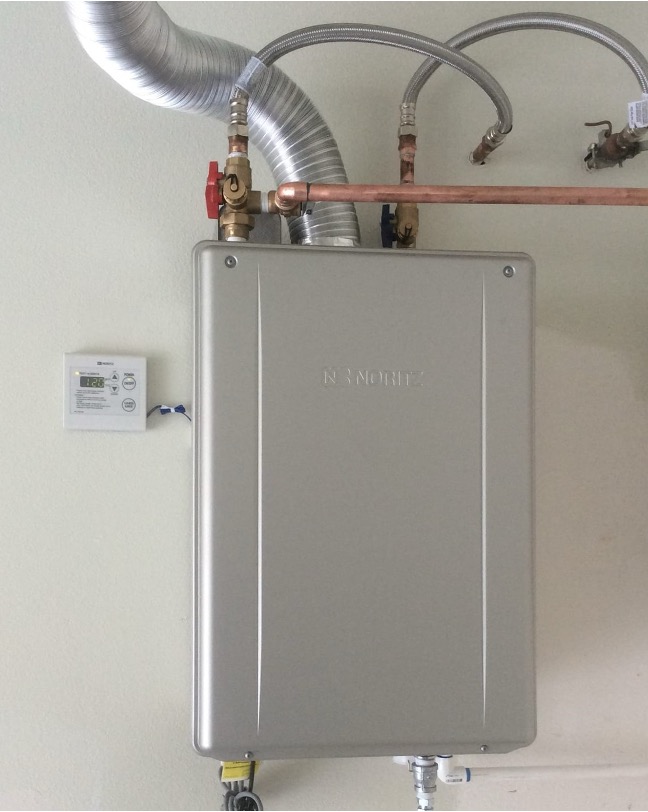
Professional plumbers can handle tankless water heater concerns for you.
Causes & Fixes for a Tankless Water Heater Going Cold: Summary Table
| Cause | What’s Happening | Fix |
|---|---|---|
| Undersized Unit | Demand exceeds the heater’s GPM capacity | Upgrade the unit or add a second in parallel |
| Mineral Buildup | Limescale insulates the heat exchanger | Schedule an annual professional descaling flush |
| Cold Water Sandwich | Cold bursts when the tap cycles off and on | Add a recirculation pump or adjust usage |
| Insufficient Gas Supply | Gas line can’t fuel the unit at full demand | Test line pressure and upgrade if needed |
| Winter Temperature Drop | Colder inlet water forces the unit to work harder | Have a technician adjust output temp and reduce simultaneous use |
| Cross-Connection | A faulty valve blends cold water into the hot line | Have a plumber locate and replace the failed valve or cartridge |
Restore Steady Hot Water from Your Tankless Heater with Point Loma Home Pros
Point Loma Home Pros can help you repair or replace your tankless water heater.
A tankless water heater going cold is frustrating, but it’s rarely a mystery. Whether the issue is mineral scale, an undersized unit, a weak gas line, or a seasonal temperature shift, each cause has a clear fix. Identifying the right one is the fastest path back to reliable hot water.
At Point Loma Home Pros, we diagnose and repair tankless water heater issues for homeowners across San Diego. Our team sizes replacements based on your actual demand, gas capacity, and venting so the new unit performs correctly. Schedule your service today to get your hot water back on track.
Frequently Asked Questions (FAQs)
Why is my tankless water heater not staying hot?
The most common reasons a tankless water heater won’t stay hot include an undersized unit that can’t keep up with simultaneous demand, mineral scale buildup that reduces heat-transfer efficiency, or an insufficient gas supply that starves the burner mid-cycle.
Can cold weather affect a tankless hot water heater?
Yes, but only a little in San Diego. In winter, the water coming into your home gets colder, so your heater has to work harder to warm it up. That can slightly lower how much hot water you get at once. Along our mild coast, the drop is small compared to colder places.
Why does my tankless water heater run when I use cold water?
A tankless unit should only fire when hot water flows through it. If it runs when you open a cold tap, first check that any single-handle faucets are turned fully to cold. If it still happens, a cross-connection is likely letting water move through the hot side, and a licensed plumber should take a look.
Why does my tankless water heater take so long to heat water?
Delayed hot water from a tankless unit is usually a distance problem. The unit heats water quickly at the heater, but if your shower or sink is 50 feet of pipe away, all that cold water in the pipe has to clear out before the hot water arrives. A few seconds of ignition time can add to the wait, and a recirculation system can shorten it.
Can Point Loma Home Pros replace my tankless water heater?
Yes. At Point Loma Home Pros, we handle full tankless water heater replacements across San Diego. Our team evaluates your hot water usage, gas line or electrical capacity, and venting requirements to make sure the new unit is sized and configured correctly for your home.
*Note: All pricing and service information is for general guidance only and reflects typical estimates at the time of writing. Actual costs, scope, and timelines may vary based on the home’s condition, access, materials, project complexity, and local market factors. For more information on our services and current pricing, visit Point Loma Home Pros.