
Key Takeaways
- Level 1 charging plugs into a regular 120-volt outlet using the cable most cars come with, while Level 2 needs a dedicated 240-volt circuit and its own hardware.
- Speed is the deciding gap: Level 1 recovers only a few miles of range each hour, so it fits light drivers and plug-in hybrids, while Level 2 refills most EVs overnight and suits anyone driving daily.
- A Level 2 charger draws on a 240-volt circuit sized to the unit, so your panel needs both an open slot and enough spare capacity, and older or fully loaded panels often call for an upgrade first.
- Level 1 usually costs nothing beyond the included cable, while a professional Level 2 install generally runs $700 to $3,000, depending on wiring distance and any electrical work your home needs.
- Point Loma Home Pros sizes the circuit, installs the charger, and confirms your panel can carry the load, handling any needed upgrade in-house so San Diego homeowners get the job done right the first time.
Level 1 vs Level 2 EV Charger: Which Is Right for Your Home?
For most daily drivers, a Level 2 charger is the right call, while Level 1 suits plug-in hybrids, low-mileage drivers, or anyone who only needs an occasional top-up.
The answer for your home comes down to three things: how far you drive, how fast you need to recharge, and what your electrical panel can support. Getting it right means charging that keeps up with your routine instead of falling behind it.

What Is a Level 1 EV Charger?
A Level 1 charger is the most basic way to charge an EV. It plugs into a standard 120-volt household outlet, the same kind you use for a lamp or a phone charger.
Most electric vehicles sold in the U.S. include a Level 1 cable, though some automakers now sell it separately, so it’s worth checking with the dealer. If your car comes with one, there’s no equipment to buy. You plug it in, and it charges.
Charging speed
Level 1 is slow by design. It draws about 12 amps from a 120-volt circuit and delivers roughly 1.4 kilowatts to the battery. This results in a gradual overnight charge that may not fully recharge the battery after a long day of driving.
Panel requirements
This is where Level 1 has a clear edge, since it asks almost nothing of your electrical system. A standard 15-amp or 20-amp household circuit is all it needs, with no panel upgrade, no new wiring, and usually no electrician.
If you have a garage outlet, you can charge tonight. It’s worth confirming that the outlet is on its own dedicated circuit, because sharing it with a refrigerator or washer can trip the breaker and further slow charging.
Miles of range per hour
Level 1 adds about 3 to 5 miles of range per hour, so an 8-hour overnight charge gives you roughly 24 to 40 miles. Many drivers cover only 30 to 40 miles a day, so Level 1 can keep pace with light daily driving, but a heavier day leaves you starting the next morning behind.
Level 1 charging suits a few situations:
- You drive fewer than 30 miles a day
- You own a plug-in hybrid with a smaller battery
- You use the EV only occasionally as a second vehicle
- You rent and can’t make electrical changes
- You need a temporary option while a Level 2 setup is installed
For most full-time EV drivers, though, Level 1 starts to feel limiting within a few weeks.
What Is a Level 2 EV Charger?
A Level 2 charger runs on a 240-volt circuit, the same voltage as your dryer, oven, or water heater. It uses a dedicated piece of hardware called an EVSE (Electric Vehicle Supply Equipment) unit, mounted in a garage, carport, or on an exterior wall.
Some units plug into a dedicated 240-volt outlet, while others are hardwired. Either way, the circuit is installed by an electrician, and the increase in charging speed is significant.
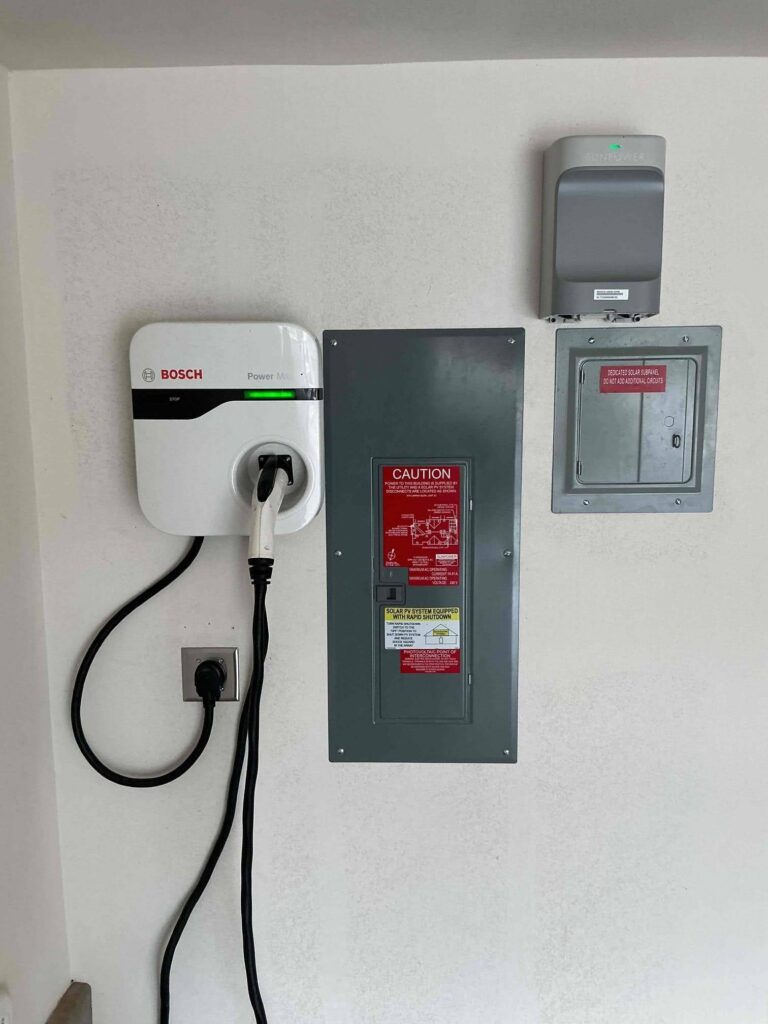
A plug-in Level 2 charger connects to a dedicated 240-volt outlet, while hardwired models connect directly to the circuit, and both require that circuit to be installed at the panel.
Charging speed
Level 2 chargers run between 16 and 80 amps and deliver from about 3.8 up to 19.2 kilowatts, depending on the unit and your vehicle’s onboard charger. Many popular home units run at 48 amps and deliver around 11.5 kilowatts, roughly eight times the power of a Level 1 connection.
Panel requirements
This is where it gets more involved. A Level 2 charger requires a dedicated 240-volt circuit sized to the unit. A 40-amp charger takes a 50-amp breaker, and a 48-amp charger takes a 60-amp breaker, giving the circuit the headroom a long charging session needs.
If you have a 200-amp panel with open slots, you may be able to add the circuit with no panel work. If your panel is older, full, or rated at only 100 amps, you’ll likely need a panel upgrade first, which adds to the cost.
Homes built before the 1990s are the most likely to need that work. An electrician should assess your panel before you buy any Level 2 hardware, since the right charger depends on what your system can support.
Miles of range per hour
A Level 2 charger adds 20 to 30 miles of range per hour, depending on the unit’s output and how fast your car accepts it. A vehicle that accepts 11.5 kilowatts gains about 30 miles an hour, and most EVs recharge fully in 4 to 8 hours. In practice, you plug in after dinner and wake up to a full battery.
Level 1 vs Level 2 EV Charger: Installation Costs
Level 1 usually costs nothing to set up, since it uses an included cable and an outlet you already have. Level 2 is where the cost comes in.
Professional installation of a Level 2 charger by a licensed electrician typically costs $700 to $3,000. Where you fall in that range depends on how much new wiring is needed, the distance from your panel to the charger, and whether an outdoor run requires conduit or trenching.
If your panel needs upgrading to carry the added load, that’s a separate job with its own cost, which a licensed electrician can assess during a site visit. Before buying, it’s worth checking with your local utility, since some offer rebates on qualifying home charging equipment.
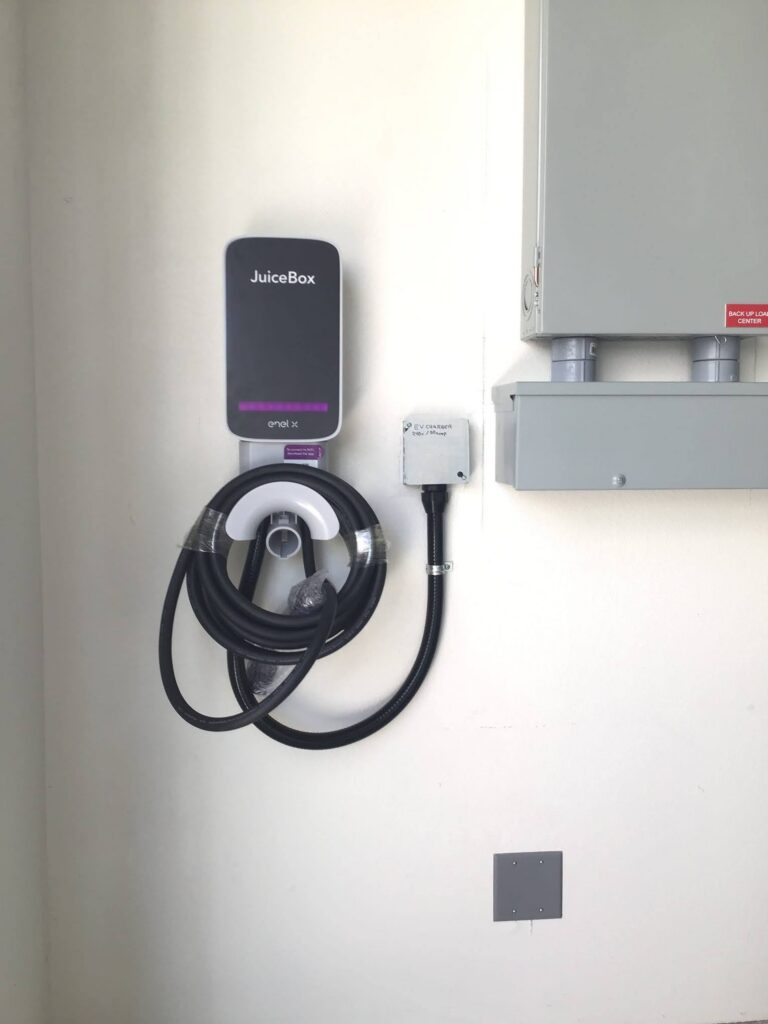
A Level 2 charger draws power from its own 240-volt circuit at the panel, so your panel’s spare capacity determines what the charger can deliver.
Level 1 vs Level 2 EV Charger: Quick Comparison
| Feature | Level 1 Charger | Level 2 Charger |
|---|---|---|
| Voltage | 120V | 240V |
| Amperage | ~12 amps | 16–80 amps |
| Power output | ~1.4 kW | 3.8–19.2 kW |
| Miles added per hour | 3–5 miles | 20–30 miles |
| Full charge time (average EV) | 24–50 hours | 4–8 hours |
| Panel requirement | Standard 15–20A circuit | Dedicated 240V circuit |
| Best for | Low-mileage or PHEV drivers | Daily EV drivers |
Install Your EV Charger with Point Loma Home Pros
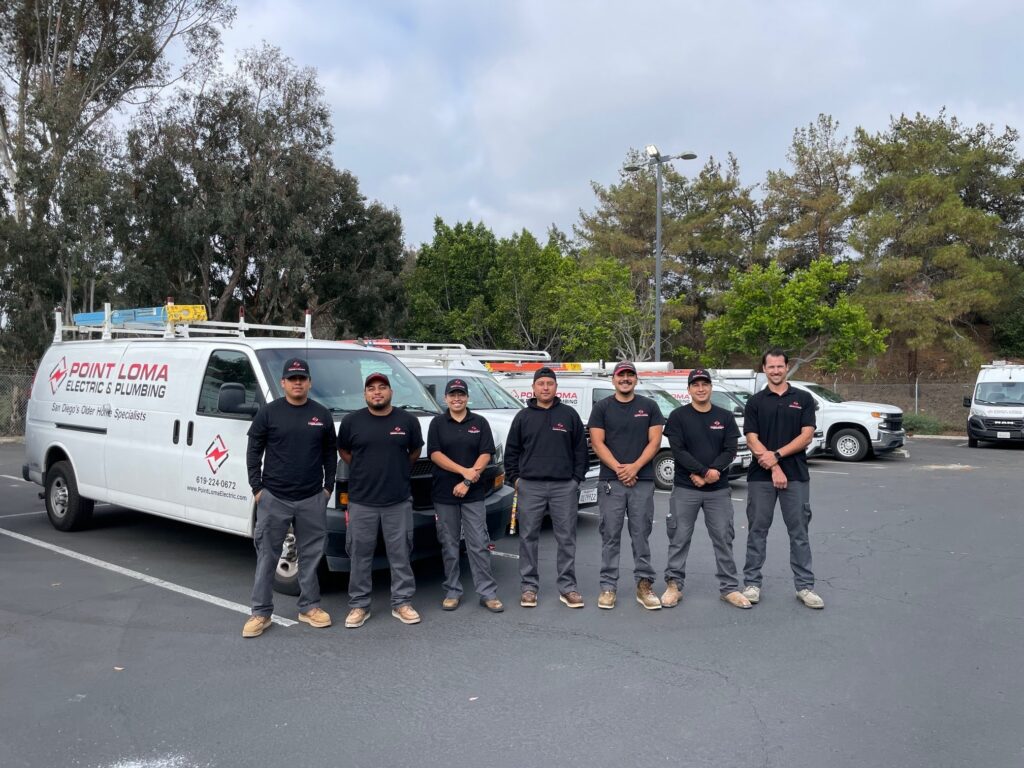
Point Loma Home Pros brings licensed, full-service electrical expertise to every home EV charger install across San Diego.
For most daily drivers, a Level 2 charger is the setup worth having, since it refills your car overnight instead of barely keeping pace. Level 1 still has its place for plug-in hybrids, low-mileage drivers, or a quick temporary fix. The deciding factor is your driving habits and what your electrical panel can support, which is why a professional look at your home matters before you buy any hardware.
At Point Loma Home Pros, our licensed electricians size the circuit, install the charger, and confirm your panel can carry the load, so the whole job is done right and to code. If a panel upgrade turns out to be part of the picture, we handle that under the same roof rather than sending you to a second contractor. Ready to charge at home? Contact Point Loma Home Pros to get your EV charger installed the right way.
Frequently Asked Questions (FAQs)
Can I install a Level 2 charger myself without an electrician?
No, a Level 2 charger runs on a 240-volt circuit that has to meet electrical code, and most cities require a licensed electrician to pull the permit and do the work. A poorly installed circuit can cause arc faults, breaker failures, or fire, and many charger makers void the warranty if the unit isn’t professionally installed. This is work for a licensed electrician, not a weekend project.
Will a Level 2 charger work with any electric vehicle?
Almost always, yes. Nearly every EV sold in North America uses the J1772 connector for Level 2 charging, and newer Teslas with the NACS port come with a J1772 adapter, so they work too. What varies is speed, since your car’s onboard charger sets the ceiling, so a vehicle capped at 7.2 kW won’t charge faster than that even on a more powerful unit.
How long does it take to install a Level 2 home charger?
A straightforward install, where the panel has capacity and the charger location is close to it, usually takes about 2 to 4 hours. More involved jobs with a panel upgrade, a long wire run, or outdoor conduit can take a full day or a follow-up visit after the inspection clears. Your electrician can estimate the time once they see the setup.
Does a Level 2 charger increase my home’s electricity bill?
Yes, though charging at home is usually more cost-effective per mile than filling up with gasoline. The bigger factor is timing, since most utilities, including SDG&E, offer time-of-use and EV rate plans with lower overnight rates, so running the charger late at night keeps costs down. Because San Diego electricity rates run high, that overnight timing makes a real difference.
Can I install a Level 2 charger without upgrading my panel?
Sometimes, yes. If your panel has an open slot and enough spare capacity, it can often take a charger with no upgrade, and a smart load-management device is another route, since it slows charging automatically when other large appliances run. Point Loma Home Pros checks your panel’s capacity with a load calculation and gives you a straight answer on the best route: a direct install, a load manager, or a panel upgrade.
*Note: All pricing and service information is for general guidance only and reflects typical estimates at the time of writing. Actual costs, scope, and timelines may vary based on the home’s condition, access, materials, project complexity, and local market factors. For more information on our services and current pricing, visit Point Loma Home Pros.