
Key Takeaways
- A garbage disposal doesn’t strictly need its own dedicated circuit, but having one is the recommended setup, since it keeps the motor’s startup surge from overloading a shared circuit.
- Sizing depends on the unit: models up to 3/4 HP work on a 15-amp circuit, 1 HP units call for a 20-amp circuit, and each amperage pairs with its own wire gauge.
- Plug-in disposals must connect to a GFCI-protected outlet, and the same protection can be added at the breaker for hardwired units, helping guard against shock in a spot where moisture is always present.
- A new dedicated circuit typically costs $1,000 to $3,500, though the price climbs if a full or outdated panel needs upgrading first.
- Point Loma Home Pros covers both the plumbing and the electrical side of a disposal in one visit, helping San Diego homeowners get the unit, the circuit, and the safety checks handled correctly.
Does a Garbage Disposal Need a Dedicated Circuit?
No, a garbage disposal isn’t required by code to have its own circuit, but running it on one is what most electricians advise and what many manufacturers spell out in their installation instructions. A dedicated circuit means a single breaker powers the disposal alone, with no dishwasher or under-sink outlet drawing off the same wire.
The reason comes down to how the motor behaves at startup. For a split second, a disposal pulls several times its normal current, and if it’s sharing a circuit that’s already running another appliance, that brief spike can tip the load past what the wiring is built to carry. Repeated over months, that strain is what trips breakers and wears down the wiring, so a separate circuit is really about keeping the setup stable long-term rather than meeting a hard rule.

Electrical Requirements for a Garbage Disposal
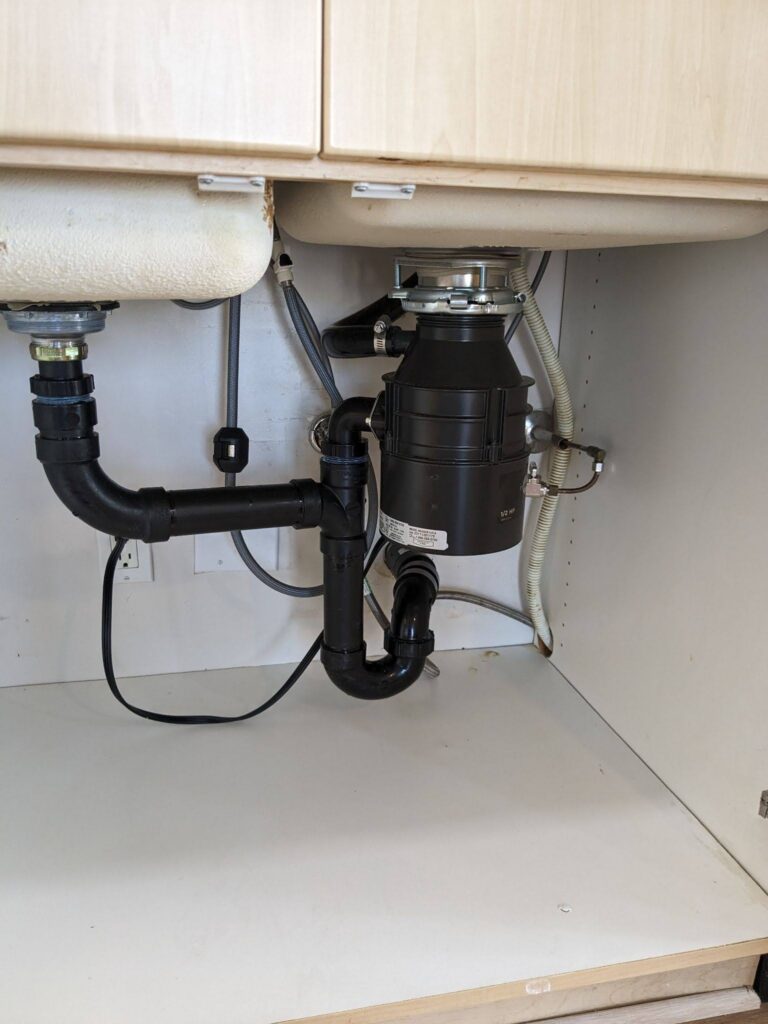
Not every under-sink outlet is wired for a disposal, so the receptacle’s amp rating and GFCI status matter as much as the voltage.
120-Volt Power Supply
Home garbage disposals run on standard 120-volt power, the same as most outlets in your house, so no special panel setup is needed for voltage. What matters more is how the circuit is sized and protected.
Correct Circuit Size: 15-Amp or 20-Amp
Most household disposals fall in the 1/3 to 3/4 HP range and draw under 10 amps, so a 15-amp circuit handles them comfortably.
Larger 1 HP units perform better on a 20-amp circuit, which gives the motor room for its startup surge without stressing the breaker.
A disposal can also share a 20-amp circuit with the dishwasher when the combined load stays within the circuit’s safe capacity, though a dedicated line for the disposal avoids nuisance tripping and leaves room to upgrade later.
Proper GFCI Protection
The National Electrical Code requires GFCI protection for kitchen outlets, including the outlet a plug-in disposal uses. A hardwired disposal isn’t always required to have it. However, a plug-connected unit must be on a GFCI-protected outlet or circuit.
A GFCI cuts power within milliseconds if it senses current leaking outside its intended path, such as through water, which matters for an appliance mounted right under the sink.
There are two ways to cover a disposal circuit:
- A GFCI outlet under the sink where the disposal plugs in
- A GFCI breaker in the panel that protects the whole circuit
A Wall Switch or Air Switch for Control
A disposal needs a way to switch it on, and the two common options are a wall switch and an air switch. A wall switch is the traditional method, wired into the circuit and mounted on the wall or inside the cabinet.
An air switch is a button on the countertop that triggers the disposal via air pressure, keeping wiring out of the finished wall and electrical components away from the sink. Both work well, and the air switch is often the cleaner choice for a retrofit.
Correct Wire Gauge
Wire gauge has to match the breaker size. A 15-amp circuit needs 14-gauge wire, and a 20-amp circuit needs 12-gauge.
Wire that’s too thin for its breaker can overheat, posing a fire risk because the breaker may not trip in time. A common mistake found during inspections is 14-gauge wire on a 20-amp breaker, so it’s worth having an electrician confirm what’s behind the wall before reusing an old circuit.
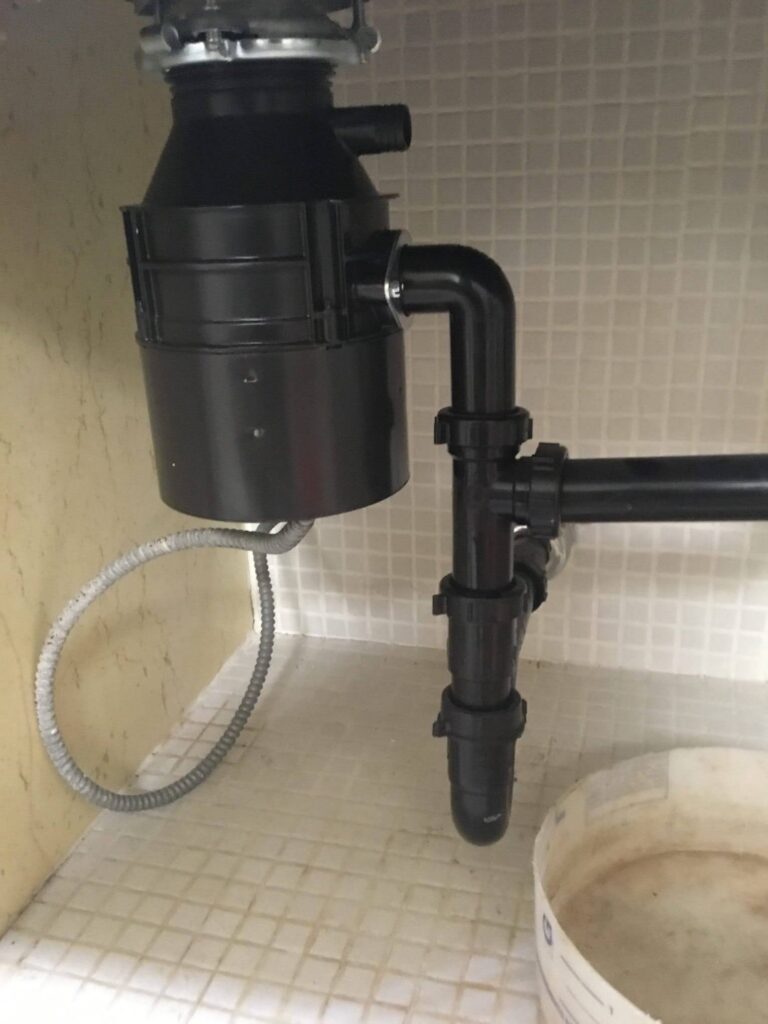
Hardwiring keeps the connection permanent and tucked away, while a plug-in setup makes it easier to swap the unit later.
How Much Does It Cost to Install a Dedicated Circuit for a Garbage Disposal?
Installing a new dedicated circuit for a garbage disposal usually runs $1,000 to $3,500. Your final cost depends on how far the circuit runs from your panel, the wire gauge, permit costs, and if a GFCI breaker is used.
A short run from an easy-to-reach panel with an open slot stays at the low end, while a long run through finished walls or an awkward panel location pushes it higher. If your panel is already full or too old to safely accommodate another circuit, a panel upgrade comes first, typically costing $9,000+, addressing far more than just the disposal.
At Point Loma Home Pros we offer attractive payment plans starting as low as $99 a month, so a needed circuit or panel upgrade doesn’t have to wait.
Signs Your Garbage Disposal Is on the Wrong Circuit
A disposal often signals a circuit problem before it turns into something bigger. Watch for these:
- The breaker trips when the disposal runs, especially with the dishwasher on at the same time
- Lights dim noticeably and stay dim when the disposal starts, beyond the quick flicker a motor can cause
- The outlet feels warm to the touch near the disposal connection
- A burning smell near the outlet or disposal, in which case stop using it and call an electrician
A single tripped breaker is a nuisance, but wiring that overheats inside a wall is a real safety concern, and the two can share the same cause. Any of these is worth a professional look.
Why Point Loma Home Pros Is the Right Call for Your Garbage Disposal

Decades of work in San Diego’s older homes means we know how these kitchens were originally wired.
A garbage disposal runs on a simple 120-volt circuit, but the details around it decide how safely it works: the amp rating, the GFCI protection, and the wire gauge. Get those right, and the disposal runs quietly for years without tripping breakers or straining your kitchen wiring. Since the correct setup depends on your disposal’s size and how your kitchen is already wired, this is a job worth handing to a licensed professional.
At Point Loma Home Pros, we install garbage disposals, add dedicated circuits, and handle the kitchen electrical and plumbing work that keeps everything running smoothly. As one team covering both trades, we can spot when a disposal, a dishwasher, and a shared circuit are working against each other and set it right instead of patching it over. If you’re not sure your disposal is on a safe, correctly sized circuit, contact Point Loma Home Pros today and we’ll take care of it.
Frequently Asked Questions (FAQs)
Can a garbage disposal share a circuit with a dishwasher?
Yes, a garbage disposal and a dishwasher can share a 20-amp circuit as long as their combined load stays within the circuit’s safe capacity. Many homeowners still prefer a dedicated circuit for the disposal, since it prevents tripping and leaves room to upgrade later.
Can a garbage disposal run on a 15-amp circuit?
Yes, a garbage disposal runs well on a dedicated 15-amp circuit as long as the motor is 3/4 HP or smaller, which covers most standard units. A shared 15-amp circuit is a different story, since it may not have the headroom for the disposal’s startup surge. For a 1 HP unit, step up to a dedicated 20-amp circuit.
Does a garbage disposal need a GFCI outlet?
A plug-in disposal needs to connect to a GFCI-protected outlet, and since most disposals plug in rather than hardwire, this applies to most installs. Units that are hardwired can skip the outlet requirement, though protecting the circuit at the breaker is still a smart move. GFCI protection guards against electric shock in areas where water is always nearby, which is why inspectors flag its absence so often.
Is it safe to install a garbage disposal circuit yourself?
Adding a new circuit means working inside a live electrical panel, which poses a shock risk and requires a licensed electrician and a permit. Mistakes like the wrong wire gauge or a missed GFCI can create hazards that stay hidden inside the wall. For anything beyond plugging a unit into an existing, properly wired outlet, it’s safest to have a professional handle it.
Should I call an electrician or a plumber for my garbage disposal?
For a garbage disposal, you can end up needing both, since the unit itself is plumbing while the circuit, breaker, and GFCI protection are electrical. Point Loma Home Pros is a fully staffed, multi-trade team of licensed electricians and plumbers, so one company installs the disposal and handles the electrical work without juggling two contractors. With over 2,000 five-star reviews and deep experience in San Diego’s older homes, we know how these kitchens are wired and how to bring an aging circuit up to today’s standard.
*Note: All pricing and service information is for general guidance only and reflects typical estimates at the time of writing. Actual costs, scope, and timelines may vary based on the home’s condition, access, materials, project complexity, and local market factors. For more information on our services and current pricing, visit Point Loma Home Pros.