Key Takeaways
- Planning is essential: assess your home’s electrical capacity, choose the correct Tesla charger, and follow local codes to ensure a safe, smooth installation.
- Level 2 charging provides the fastest, most reliable home charging, delivering 9–52 miles of range per hour and enabling overnight full charges.
- Proper electrical panel setup, including breakers, wiring, and conduit, is critical for safe, code-compliant Tesla Wall Connector installation.
- Installation costs vary by charger type and home setup, with professional installation ensuring reliability and long-term performance.
- Point Loma Home Pros specializes in San Diego homes, offering expert EV charger installation with high-quality workmanship, safety-first practices, and friendly, community-focused support.
What You Need to Know About Tesla Home Charger Installation
Installing a Tesla charger involves more than mounting hardware. You need to consider your home’s electrical capacity, select the correct charger, and ensure your panel can handle the load. Planning avoids surprises and provides a smooth installation.
Most homes built in the last 20–30 years can accommodate a Tesla charger, but older systems may require upgrades. A dedicated 60-amp breaker for a 48-amp Wall Connector delivers the fastest charging speeds Tesla vehicles accept, far outperforming standard outlets.
Local codes and permits vary. Some areas treat EV chargers like any appliance, while others require specific inspections. Always check with your local building department to ensure a safe, compliant installation.

Tesla Home Charging Options: Level 1 vs. Level 2
Tesla vehicles can charge at home using two primary methods, each with different power requirements, speeds, and installation needs. Choosing the right option depends on your driving habits and how quickly you need to recharge.
Level 1 Charging: Standard Outlet Basics
Level 1, also called “trickle charging,” uses standard 120-volt outlets, the same circuits that power most home electronics. Every Tesla comes with a NEMA 5-15 adapter, allowing you to charge directly from a household outlet.
This method delivers approximately 2 miles of range per hour, with power around 1.4 kW. It’s best for light daily driving or short commutes, but slower for larger batteries and longer trips.
Level 2 Charging: Faster 240V Power
Level 2 chargers use 240-volt circuits, similar to those used by electric dryers or stovetops. Options include Tesla Wall Connectors, plugless wireless chargers, and most public charging stations.
Level 2 charging adds 9–52 miles of range per hour, with power between 3.7 and 17.2 kW, allowing most Tesla models to charge fully overnight. Professional installation is required to ensure safety and code compliance, especially in older San Diego homes.
Mobile Connector vs. Wall Connector: Which Is Right for You?
Tesla offers two primary charging solutions for home use. The Mobile Connector comes included with every new Tesla and can connect to various outlets using adapters. The Wall Connector is a permanently mounted solution that requires professional installation but delivers faster charging and additional features.

Professional installation keeps wiring neat, protected with conduit, and ready for years of hassle-free use.
Electrical Panel Requirements for Your Tesla Charger
Installing a Tesla Wall Connector requires understanding your home’s electrical panel and wiring setup. Proper planning ensures safe, efficient charging and compliance with local codes.
Tesla Wall Connector
The Tesla Wall Connector is designed for home use, providing significantly faster charging than a standard outlet. It’s compatible with most Tesla vehicles and offers adjustable current settings based on your panel capacity.
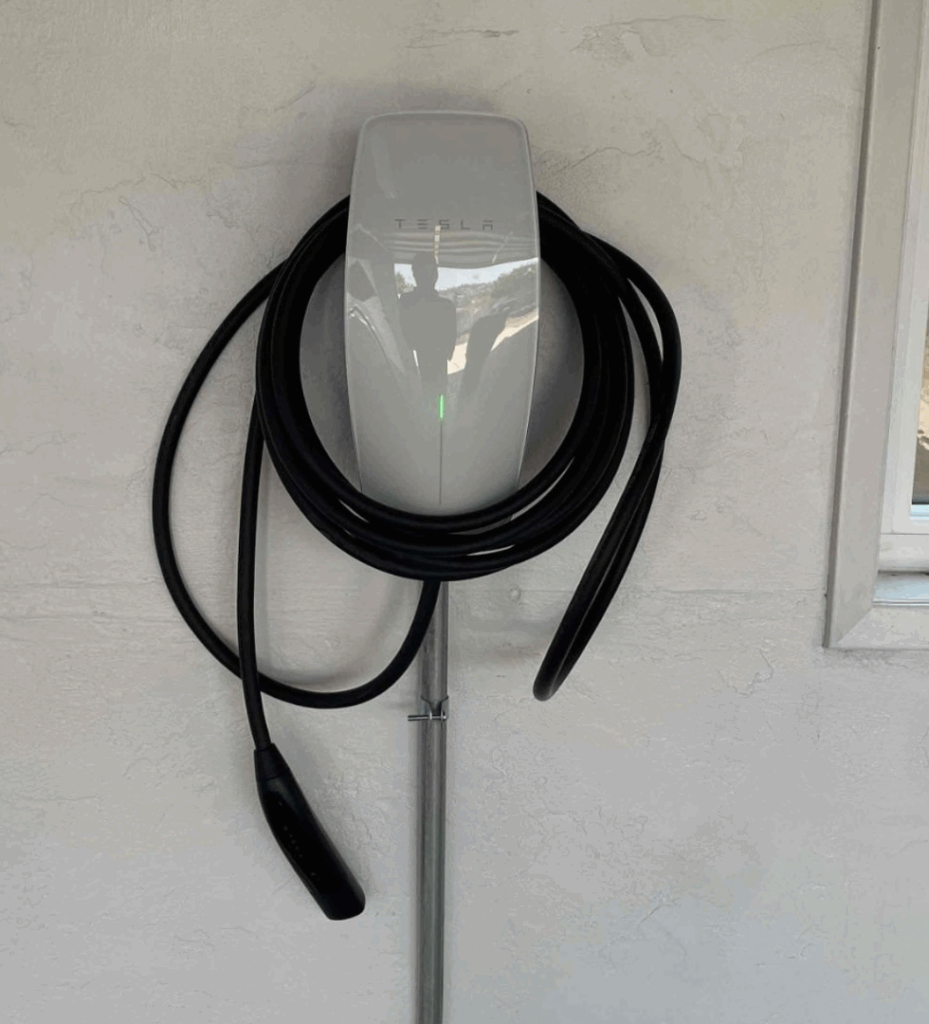
The Tesla Wall Connector (shown above) offers the fastest at-home charging option for Tesla vehicles, delivering up to 75 kilometers of range per hour.
Wiring: 8 AWG THHN
THHN (Thermoplastic High Heat-Resistant Nylon-coated) wire is commonly used in homes and businesses. For a typical Tesla installation, 8 AWG wire is suitable for carrying the current safely, handling up to 55 amps. If your setup requires more, a larger 6 AWG wire may be needed.
Electrical Conduit
Conduit protects the wiring and ensures it meets safety standards. Options include rigid metal, EMT (electrical metallic tubing), or PVC, depending on local regulations and the environment where the charger is installed. Proper conduit installation prevents damage and keeps your system code-compliant.
Circuit Breaker
A dedicated 60-amp circuit breaker is typically required for Tesla Wall Connectors. The exact size may vary depending on your panel, charger settings, and local code requirements. A dedicated breaker ensures your charger operates safely without overloading the system.
Disconnect Switch
Some local codes require a disconnect switch near the charging station. This allows power to be quickly shut off for maintenance or emergencies. Your electrician will determine if this is necessary for your installation.
Distance & Voltage Considerations
The distance from your breaker panel to the charger matters. Longer runs can cause a voltage drop, which can affect charging efficiency. For distances over 100 feet, a larger wire may be required to maintain performance, in accordance with NEC (National Electrical Code) guidelines.
Tools & Preparation
Professional installation typically uses tools like wire strippers, conduit benders, drills, fish tape, voltage testers, and screwdrivers. These ensure a neat, safe, and reliable installation.
Complete Cost Breakdown for Tesla Charger Installation
Understanding the potential costs of installing a Tesla charger helps homeowners plan and avoid surprises. Costs vary depending on the type of charger you choose and any additional electrical work your home may need.
Mobile Connector
The Mobile Connector is portable and convenient, allowing charging at any compatible outlet. While the charger itself typically costs around $300, installation may range from $750 to $1,500 depending on your home’s electrical setup. This option is ideal for light, occasional charging or homes that don’t require a permanent Level 2 charger.
Tesla Wall Connector
The Tesla Wall Connector provides optimal, fast charging with a NACS connector. The unit generally costs about $450, with installation estimated between $750 and $1,500. This solution is best for daily use, delivering faster, more reliable charging than a standard outlet.
Universal Wall Connector
For homes with multiple EVs or varied charging needs, the Universal Wall Connector works with both NACS and J1772 plugs. The charger costs around $600, and installation typically ranges from $750 to $1,500. This option provides flexibility for households with different EV models or future-proofing for multiple vehicles.
What Affects Installation Costs
Several factors influence the total cost, including:
- If your home requires a panel upgrade
- Distance from the panel to the charging location
- Wiring complexity and conduit needs
- Local permit requirements
Professional installation ensures safety, code compliance, and reliable operation, making it the best approach for San Diego homeowners.
Step-by-Step Tesla Charger Installation Guide
Following a structured approach ensures your Tesla charger installation is smooth, safe, and fully compliant.
1. Choose the Right Installation Location
Select a spot that balances convenience, cable reach, and installation cost. Ideally, mount the Wall Connector within 20 feet of your Tesla’s charge port, preferably on the same side as the port. Consider multiple vehicles and cable reach.
For outdoor installations, choose a location with some weather protection, such as a garage or under an overhang. Local codes typically require mounting between 48 and 60 inches from the ground. Positioning near your electrical panel reduces wiring runs and lowers installation costs.
2. Get Multiple Installation Quotes
Contact at least three licensed electricians experienced with EV chargers. Make sure each quote includes panel assessment, circuit installation, mounting, and permits. Ask about past Tesla installations and request references.
The lowest price isn’t always the best; consider experience, warranty, and ongoing support. Tesla-recommended installers often have specialized training worth a slight premium.
3. Apply for Necessary Permits
Most electricians handle permits, but understanding the process helps you track progress. Permits usually require panel capacity details, circuit specs, and the charger’s location. Some jurisdictions require load calculations to ensure your service can handle the extra demand.
Processing times vary, from same-day approvals to several weeks in busy areas, so factor this into your installation schedule.
4. Schedule Your Installation
Plan for a day when you can be present, and your vehicle is accessible. Standard installations take 2–4 hours, while complex jobs with panel upgrades may take 1–2 days.
The process typically includes mounting the charger, installing a dedicated breaker, running conduit and wiring, making electrical connections, and setting the charger’s amperage. Initial testing ensures the system works safely.
5. Final Inspection & Setup
After installation, an electrical inspector verifies that the work meets code, checking wiring, grounding, breaker sizing, and weatherproofing. Once approved, your electrician completes setup, including connecting the Wall Connector to Wi-Fi if desired.
Test the charger with your Tesla to confirm everything works properly before completing the project.
DIY vs. Professional Installation: What’s Best?
While it may be tempting to attempt a DIY Tesla charger installation, professional installation is strongly recommended for safety, efficiency, and long-term reliability. Tesla chargers draw high-voltage electricity and require proper wiring, breakers, and grounding to operate safely. Any mistakes can create fire hazards, damage your electrical system, or void warranties.
A licensed professional ensures your installation meets local codes, secures all permits, and handles any panel upgrades or wiring adjustments your home may need. They also properly test the charger, set the correct amperage, and confirm everything works seamlessly.
Why San Diego Homeowners Trust Point Loma Home Pros for Tesla Charger Installations

Point Loma Home Pros offers professional EV charging station installation services in San Diego, CA, ensuring safe, compliant setups tailored to homeowners’ electrical systems and parking needs.
At Point Loma Home Pros, we help San Diego homeowners safely and efficiently upgrade their homes for Tesla charger installations. With decades of experience with older homes, we handle wiring quirks, panel limitations, and unique construction challenges to deliver reliable, long-lasting results.
Why Choose Us
- Experts in Older Homes: We understand San Diego’s older electrical systems, ensuring safe, code-compliant upgrades.
- Full-Service Solutions: One team handles electrical, plumbing, heating, and air, including panel upgrades or rewiring.
- Premium Workmanship: Clean, professional installations with safety-first practices and clear explanations.
- EV Charging Specialists: Tesla Wall Connectors, Level 2 chargers, and load management systems installed to fit your home.
- Community-Focused Service: Friendly, neighbourly support that keeps homeowners informed and confident.
Trust Point Loma Home Pros to make your Tesla charging setup seamless, reliable, and future-ready, giving you peace of mind and the convenience of a fully charged vehicle every morning.
Your Tesla deserves a safe, professional setup. Start here.
Frequently Asked Questions (FAQs)
How long does it take to install a Tesla home charger?
Straightforward installations usually take 2–4 hours. Complex jobs with panel upgrades or long wire runs can take 1–2 days. Including permits, scheduling, and inspections, the whole process typically spans 1–3 weeks.
Can I install a Tesla charger in my apartment or condo?
Yes, with landlord or HOA approval. Apartments may require agreements on costs and ownership, while condos often need HOA permits. “Right-to-charge” laws can help, but electricity billing and installation guidelines must be followed.
What happens if my home’s electrical service isn’t adequate?
Options include upgrading to a higher-capacity service, installing a dedicated subpanel, or using load management systems. Tesla chargers can also operate at lower amperages to match existing capacity, though charging speed will be reduced.
Do I need to notify my utility company before installing?
Not always required, but notifying them is recommended. Some offer EV rates or rebates, and high-demand areas may require grid assessment. Your electrician usually manages any necessary notifications or approvals.
How far can the charger be from my electrical panel?
A Tesla charger can be installed several feet, or even dozens of feet, from your panel, though longer distances increase wiring and labor costs. At Point Loma Home Pros, we assess your home and recommend the safest, most cost-effective location to ensure your charger works efficiently and installation is hassle-free.